📌 这节课讲了什么
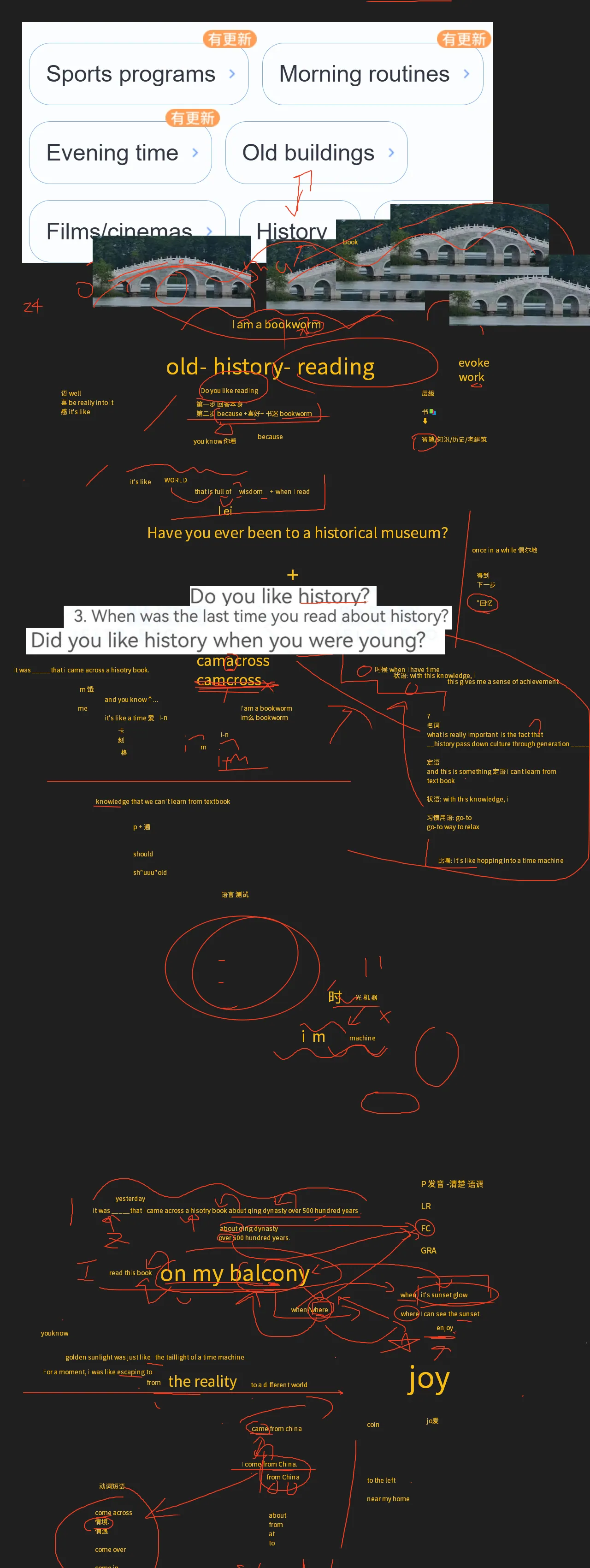
这节课回答一个问题:什么样的口语才算"好口语"。板书从三个地方切进去:
- 发音 —— 英语和中文的区别,以及"读英语句子的时候,脑子应该想象什么画面";
- 内容怎么往下想 —— 以一个话题(老建筑 / 历史 / 读书)为例,从"第一步回答本身"走到"第二步 because + 喜好 + 书迷",再往下降到具体的层级;
- 语法零件 —— 介词短语、when / where 状语、名词从句、强调句,都是为了让一段话有层次、有画面。
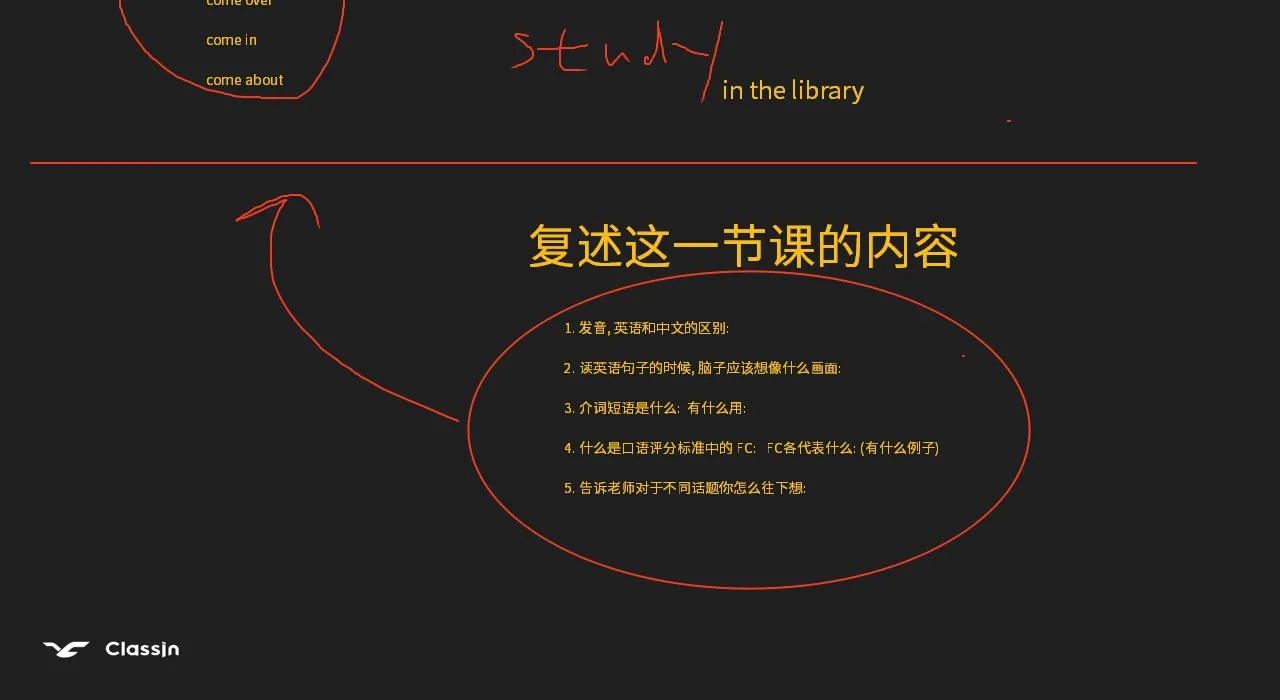
板书最后留了一张复述清单,把这节课的五个问题列了出来。
板书这一课选的话题标签是:Sports programs、Morning routines、Evening time、Old buildings、Films/cinemas、History —— 绕着"老建筑 / 历史 / 读书"这一组展开。
🧱 方法:P1 回答两步走
板书以 Do you like reading 为例,把回答拆成两步:
- 第一步:回答本身;
- 第二步:because + 喜好 + 书迷 bookworm。
也就是说:先给一个直接的回答,再用 because 把"喜好"和"身份"接上。板书在这两步旁边写了 you know 你看 和 because —— 这两个就是句子之间的"接缝"。
用来接身份的那句(板书原文):
I am a bookworm
I'm a bookworm
板书把 I am a bookworm 用大字单独写出来,说明这句是这一类话题的"底牌":只要话题落到书、历史、博物馆,都可以把自己说成一个 bookworm(书虫)。
同一个话题,板书还列了这一串会被问到的问题:
Have you ever been to a historical museum?
Do you like history?
- When was the last time you read about history?
Did you like history when you were young?
注意第 2、3、4 问:问的是时间线上的事(上一次、小时候),所以回答里一定要有 when 一类的信息。
💬 语气词:让句子"活"起来
板书左侧单独列了三个"语气工具":
| 板书 | 用法 |
|---|---|
| well | 开口前的缓冲:Well, ... |
| be really into it | 表示"很喜欢、很投入" |
| it's like | 打比方、形容感受 |
这三个不是废话,是把"回答"变成"说话"的零件。板书在句子中间还标了 you know(你看),以及回声式的停顿记号,都是同一个作用。
🧱 层级:从一个"书"往下走
板书用一条向下的线画出"层级":
书 ↓ 智慧 / 知识 / 历史 / 老建筑
也就是说:话题是"书",但内容可以落到智慧、知识、历史、老建筑这些更具体、更有画面的东西上。板书在这条线旁边单独列了两个动词:
evoke(唤起) / work(起作用)
配合"层级"的说法(板书原文):
it's like WORLD that is full of wisdom + when i read
前半句是比喻(it's like + 一个名词),+ when i read 表示后面接时间状语从句 —— 先给画面,再给"什么时候"。
💬 强调句:把时间顶到最前面
板书给了一个强调句的框架:
it was ______ that i came across a history book.
板书把写错的 cam across 划掉,改成 came across。
横线上填的是时间。板书给的例子:
yesterday
it was ______ that i came across a history book about qing dynasty over 500 hundred years.
about qing dynasty / over 500 hundred years.
这个句式的用处:把"昨天"这种时间提到前面,句子的重心就落在时间上,而不是"我"身上。
💬 时间状语与地点状语:when / where
板书在句子旁边写了 when / where,并列出这两句:
when it's sunset glow
where i can see the sunset.
- when 后面接的是时间(晚霞出现的时候);
- where 后面接的是地点(能看到日落的地方)。
板书还用大字写了一个地点短语:
on my balcony
以及 read this book(板书原文)。合起来就是"在阳台上读这本书"—— 一个具体的地点,比只说 read a book 有画面得多。
板书在这一段右边还标了一组答题路标:once in a while(偶尔地)、得到 → 下一步 → "回忆" —— 回答"上一次是什么时候"这类题,就是把"偶尔得到的信息"往"回忆"上引。
💬 一句"有画面"的句子
板书原文:
golden sunlight was just like the taillight of a time machine.
For a moment, i was like escaping to the reality
板书在 escaping to 的 to 上做了修改,写成 from;句子后面还挂着 to a different world。所以完整的意思是:从现实逃到另一个世界。
板书最后单独写了一个大字:
joy
—— 一个句子收尾时,可以用一个具体的"情绪词"落地。
🧱 名词从句与定语:把"知识"讲出分量
板书这一块标了序号 7,并写了一个"名词":
what is really important is the fact that history pass down culture through generation
拆开看:
| 零件 | 板书上的样子 |
|---|---|
| 主语从句 | what is really important |
| 同位语从句 | the fact that history pass down culture through generation |
板书接着写"定语":
and this is something 定语 i cant learn from text book
knowledge that we can't learn from textbook
也就是说:something / knowledge 后面都可以挂一个定语从句,把"课本上学不到"这件事说清楚。
再往下是"状语":
状语: with this knowledge, i ...
this gives me a sense of achievement
with this knowledge(带着这些知识)这样的介词短语放在句首,是最省力的状语。
🔊 发音与评分标准
板书右侧一列:
P 发音 - 清楚 语调
LR
FC ← 板书把这一项圈了出来
GRA
复述清单里的第 4 条问的就是:什么是口语评分标准中的 FC,FC 各代表什么(有什么例子)。板书把 FC 单独圈出来,说明这是这节课要能自己举例说明的一项。
🧱 介词短语:小词管大事
板书把"介词"单独列成一行:
about / from / at / to
例子(板书原文):
came from china → I come from China. → from China
介词的落点(板书原文):
in the library
to the left
near my home
复述清单第 3 条问的就是:介词短语是什么,有什么用。看这三组就明白:它们都是挂在句子后面,负责交代"在哪里、在哪边、离家多近"。
💬 动词短语:一个 come 能变出多少
板书单独列了一组 come 的动词短语:
come across(情境 / 偶遇)
come over
come in
come about
其中 come across 被框出来,旁边标了"情境、偶遇"两个中文 —— 就是"偶然遇到、碰到(书、人、事情)"。
💬 复述清单:这节课要能自己讲出来的 5 件事
板书原文列了这张清单:
- 发音,英语和中文的区别;
- 读英语句子的时候,脑子应该想象什么画面;
- 介词短语是什么,有什么用;
- 什么是口语评分标准中的 FC,FC 各代表什么(有什么例子);
- 对于不同话题,你怎么往下想。
📖 词汇与表达
| 英文 | 中文 | 搭配 / 用法 |
|---|---|---|
| bookworm | 书虫 | I am a bookworm |
| be really into it | 很喜欢、很投入 | 语气表达 |
| it's like | 就像 | 打比方 |
| well | 嗯、这个 | 开口缓冲 |
| you know | 你看 | 口语垫词 |
| once in a while | 偶尔地 | 回答频率 |
| come across | 偶遇、碰到 | 情境;后接书 / 人 / 事 |
| come over | 过来 | come 的动词短语 |
| come in | 进来 | 同上 |
| come about | 发生 | 同上 |
| evoke | 唤起 | 板书单独列出的动词 |
| work | 起作用、管用 | 同上 |
| wisdom | 智慧 | a world that is full of wisdom |
| historical museum | 历史博物馆 | Have you ever been to a historical museum? |
| history | 历史 | Do you like history? |
| qing dynasty | 清朝 | a history book about qing dynasty |
| golden sunlight | 金色的阳光 | golden sunlight was just like... |
| sunset glow | 晚霞 | when it's sunset glow |
| the sunset | 日落 | where i can see the sunset |
| balcony | 阳台 | on my balcony |
| taillight | 尾灯 | the taillight of a time machine |
| time machine | 时光机 | 同上 |
| reality | 现实 | escaping from the reality |
| joy | 喜悦 | 板书收尾词 |
| a sense of achievement | 成就感 | this gives me a sense of achievement |
| textbook | 课本 | knowledge that we can't learn from textbook |
| generation | 一代人 | pass down culture through generation |
| pass down | 传下去 | culture through generation |
| come from | 来自 | I come from China. |
| the library | 图书馆 | in the library |
| to the left | 在左边 | 方位介词短语 |
| near my home | 我家附近 | 同上 |
| achievement | 成就 | 见 a sense of achievement |
⚠️ 提醒 / 易错
| 板书上的错 | 改法 |
|---|---|
| cam across | came across |
| escaping to the reality | escaping from the reality |
三条方法上的提醒:
- 回答不要只有一句。 第一步回答本身,第二步用 because 接"喜好 + 身份",这是板书给的固定两步;
- 每个话题都要有一条"往下的层级"。 书 → 智慧 / 知识 / 历史 / 老建筑,这样才有话说;
- 介词短语和状语是"画面"的来源。 on my balcony、when it's sunset glow、where I can see the sunset —— 加上它们,句子才有场景。