📌 这节课讲了什么
板书文件名是 英语说话思考方式 以及 体感 —— 上半段讲说话的时候脑子里是怎么想的,下半段讲嘴巴和舌头放在哪里。
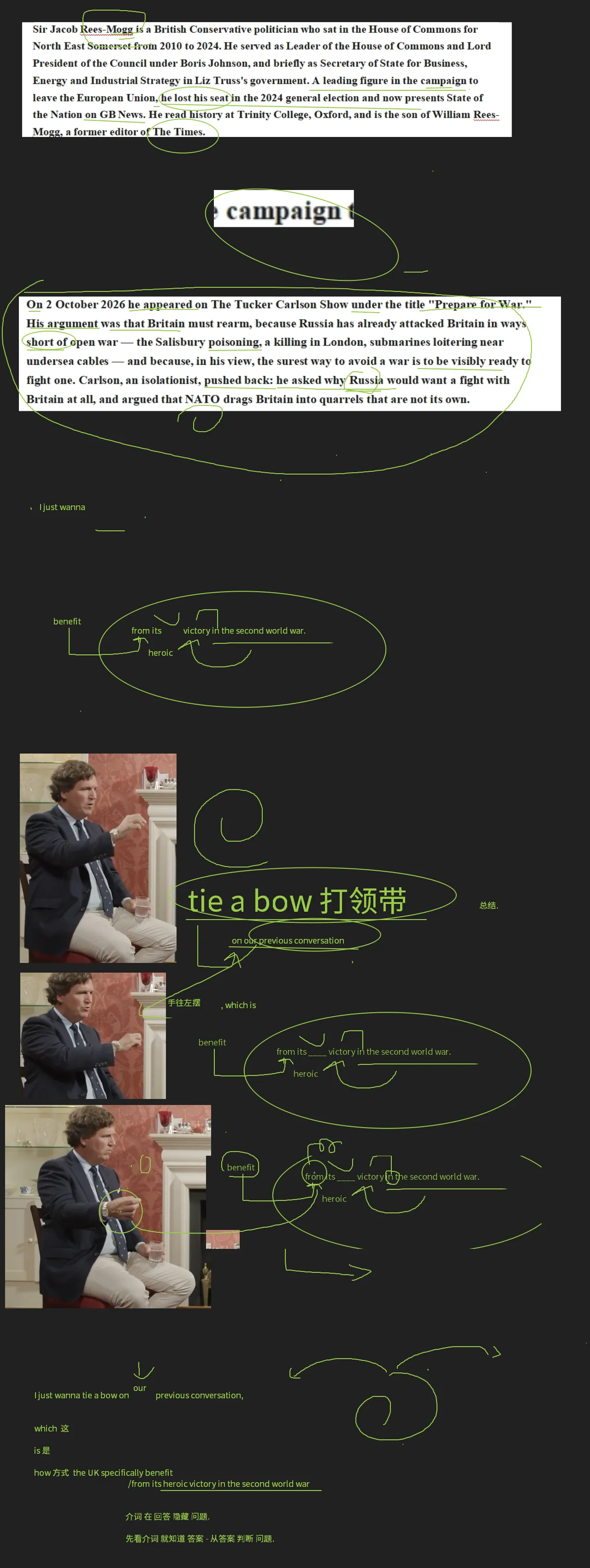
上半段从两段时事英语开始:一段是 Rees-Mogg 的人物简介(维基式),一段是他上 Tucker Carlson 节目说了什么。板书在这两段上圈圈画画,圈的全部是介词和定语。板书中间那两行中文是全课的钥匙:
介词 在回答 隐藏 问题.
先看介词 就知道 答案 - 从答案 判断 问题.
下半段把上课真说的三句话拆开:what's on your mind today? / How's the weather today? / how's your day been going?。这里埋着现在完成时(结果)和现在完成进行时(时长)的区别,最后落到发音的体感:
下嘴唇震动 + 舌尖往鼻子找 + 舌头碰到上口盖 = N
🧩 材料一:一段人物简介
板书顶上贴了一整段介绍:
Sir Jacob Rees-Mogg is a British Conservative politician who sat in the House of Commons for North East Somerset from 2010 to 2024. He served as Leader of the House of Commons and Lord President of the Council under Boris Johnson, and briefly as Secretary of State for Business, Energy and Industrial Strategy in Liz Truss's government. A leading figure in the campaign to leave the European Union, he lost his seat in the 2024 general election and now presents State of the Nation on GB News. He read history at Trinity College, Oxford, and is the son of William Rees-Mogg, a former editor of The Times.
板书在这一段上用绿笔圈了四处,圈的不是难词,是结构:
| 板书圈的 | 它的身份 |
|---|---|
| who sat in | 定语从句 —— who 后面跟一整个句子,挂在 politician 后面 |
| from 2010 to 2024 | 介词 —— from … to …,从哪儿到哪儿 |
| the campaign to | 不定式作定语 —— to leave 说明这是个「为了脱欧的」campaign |
| a former editor of The Times | of 结构 —— 谁的编辑 |
板书还把 the campaign to 那半句放大成一张小图单独圈出来 —— 就是要你看清这个 to。
🧩 材料二:他上节目说了什么
第二段是这件事本身:
On 2 October 2026 he appeared on The Tucker Carlson Show under the title "Prepare for War." His argument was that Britain must rearm, because Russia has already attacked Britain in ways short of open war — the Salisbury poisoning, a killing in London, submarines loitering near undersea cables — and because, in his view, the surest way to avoid a war is to be visibly ready to fight one. Carlson, an isolationist, pushed back: he asked why Russia would want a fight with Britain at all, and argued that NATO drags Britain into quarrels that are not its own.
板书在这里圈/划的四处:
| 板书标的 | 它在干什么 |
|---|---|
| short of open war | short of = 还没到……的程度 —— 「还没到公开战争的程度」 |
| submarines loitering near undersea cables | 分词作定语(自己做的那个分身)—— loitering 挂在潜艇后面 |
| an isolationist | 不介入主义者 —— 元音开头,所以是 an |
| quarrels that are not its own | 定语从句 —— 「不是它自己的那些争吵」,its 指 Britain |
还有一个词组板书划了线,考试里很值钱:
he asked why Russia would want a fight with Britain at all
at all 放在疑问句末尾,意思是「到底、究竟」,是给整句话加力气的 —— 加不加 at all,这句话的态度完全不一样。
🎯 全课的钥匙:介词在回答隐藏问题
板书在两段材料中间写了一行中文,是这节课最该带走的一句话:
介词 在回答 隐藏 问题.
先看介词 就知道 答案 - 从答案 判断 问题.
意思是:每个介词,背后都藏着一个没写出来的问题。 你在听力里听到一个介词,基本就能反推出上一句问的是什么。
板书用填空的方式练了这一点 —— 它把那一句拆成空格,让你先看介词:
benefit from its ______ victory in the second world war.
(板书把答案 heroic 引出来填进去)
看到 from,就知道空格里要填的是「来源」。 换成 for 就是「目的/用途/对象」,换成 in 就是「范围」。板书在别处正好把这三个写在一起:
| 介词 | 它在回答的问题 | 板书原句 |
|---|---|---|
| from | 从哪儿来(源头) | benefit from its heroic victory |
| for | 目的 / 用途 / 对象 | 板书旁注:for 目的/用途/对象 |
| in | 范围 | in GAAP / in the second world war |
| to | 朝哪儿去 | the campaign to leave / from 2010 to 2024 |
| with | 跟谁一起 / 用什么 | a fight with Britain |
| of | 谁的 / 什么的 | an editor of The Times |
怎么用: 做听力的时候,先别急着抓名词 —— 先抓介词。介词一定,那句话的「关系」就定了,答案往往就在介词后面那一小块。
🎀 一句话让整段话「收口」
板书中间画了一个大椭圆,里面这几个字最大:
tie a bow 打领带
旁边板书注了两个字:总结。
tie a bow 原意是「打个蝴蝶结」,引申出来就是把话头扎起来、收个尾。板书写的那句话是:
I just wanna tie a bow on our previous conversation, which is how the UK specifically benefited from its heroic victory in the Second World War.
板书把这一句拆成三层,一层一层标出来:
| 板书标的 | 是什么 |
|---|---|
| tie a bow on our previous conversation | on + 对象 —— 在「刚才那段话」上打个结(收尾) |
| which 这 | which 指前面整件事 |
| is 是 | 主句的系动词 |
| how 方式 | how 带出方式 —— 「英国具体是怎么受益的」,这里 how 引导的是名词性从句,不是疑问句 |
which is how + 句子 —— 这个结构专门用来给前文做总结:「这,就是……的方式」。上一课学的是 which is 后面接表语,这一课往后接了一整块 how。
板书还用 Carlson 的三张照片标了动作:一张是手绕圈、一张是手往左摆(指向刚才说过的话)、一张是打领带的手势。身体和句子是一起走的 —— 说「回指前文」的时候,手自然往左摆。
🧠 「想把……记住」怎么说
板书往下换了一个日常场景,先给一句开场问题:
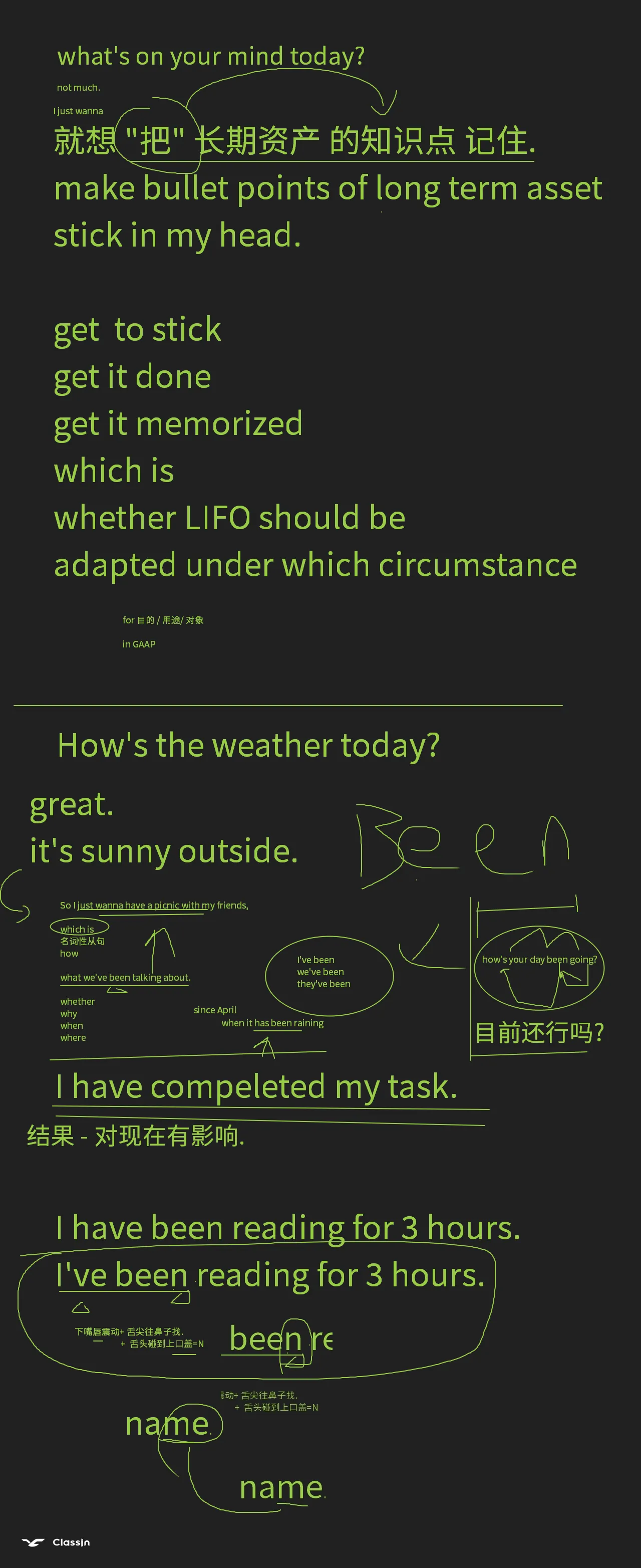
what's on your mind today?
not much.
I just wanna …
板书把它补完,并在中文下面把那个「把」圈了出来:
就想「把」长期资产的知识点记住.
make bullet points of long term asset stick in my head.
中文的「把」,在英语里不是词,是结构 —— make / get + 宾语 + 补语。板书顺势给了一串 get 的用法:
get to stick
get it done
get it memorized
| 说法 | 意思 |
|---|---|
| make / get sth to stick in my head | 把某样东西记进脑子里 |
| get to stick | 记住(粘住) |
| get it done | 把它做完 |
| get it memorized | 把它背下来 |
| make bullet points | 列成要点 |
make bullet points of long term asset —— 板书这里 asset 是单数,说的是「长期资产这个知识点」,所以没加 s。
🧷 名词性从句家族
板书在这一段旁边把这一家人排了一列:
which is / what / whether / why / when / where / how
板书给的例句是 Flora 自己专业里的句子(板书原文):
whether LIFO should be adapted under which circumstance
板书旁注:in GAAP
这一句里 whether … should … 是名词性从句当主语/宾语——「LIFO 该不该、在什么情况下用」。
再往下还有一句完整的:
So I just wanna have a picnic with my friends, which is what we've been talking about.
板书在这句下面标了 which is 名词性从句 / how,并在 what we've been talking about 下面划了线。which is what … 和上面的 which is how … 是同一个模子:what 装「东西」,how 装「方式」。
天气那一问
How's the weather today?
great. it's sunny outside.
great. 就是一句话答完 —— 先给态度,再给事实。然后才是正文:
So I just wanna have a picnic with my friends, which is what we've been talking about.
⏳ 现在完成时 vs 现在完成进行时
板书最后用两句自己的话,把这两个时态钉死了。
一、完成时 = 结果,对现在有影响
I have completed my task.
板书注:结果 - 对现在有影响.
重点不在「什么时候完成的」,在现在 —— 事情做完了,所以我现在可以交差。
二、完成进行时 = 时长
I have been reading for 3 hours.
I've been reading for 3 hours.
板书把第二句(缩略版)整个圈了起来 —— 因为口语里永远是缩略版。这个时态说的是「一直在做,做了多久」。
板书把四个助动词摆成一排:
I've been / we've been / they've been
还有一组时间标记:
since April / when it has been raining
since + 时间点(从四月起就一直在下雨),这就是完成进行时最典型的搭档。
三、问别人「最近怎么样」
how's your day been going?
板书注:目前还行吗?
这句话本身就是完成进行时 —— 「你今天一直过得怎么样」。how's … been going? 比 how are you? 更具体,也更像母语者的开场。
👄 体感:那个 N 音到底在哪
这是标题里的「体感」。板书把 I've been reading for 3 hours. 圈起来,在两个助动词下面各画了一个小三角,然后写:
下嘴唇震动 + 舌尖往鼻子找.
+ 舌头碰到上口盖 = N
拆开就是三件事:
| 动作 | 对应哪个音 |
|---|---|
| 下嘴唇震动(上门牙轻碰下唇) | I've 的 -ve |
| 舌尖往鼻子找(舌尖抬起,气流从鼻子走) | been 的 n |
| 舌头碰到上口盖 | N 的落点 |
板书把 been 和 re 并排写在一起 —— 那是 been reading 连读的位置:前一个词以 n 收,后一个词以 r 起,舌头就在这两个位置之间走。
然后板书连写了两次:
name
name
用 name 来练这个 N —— 因为 name 就是「鼻音 + 元音」,舌尖不碰到上口盖,这个音就出不来。feel 到上口盖那一下,才算发出 N。
⚠️ 提醒 / 易错
adapted应为adopted—— 板书写的是whether LIFO should be adapted。会计上「采用一种方法/准则」是 adopt(采用);adapt 是「适应、改编」。adopt a method/adopt a standard才是对的搭配。at all别漏也别乱放 ——why Russia would want a fight with Britain **at all**里的at all是「到底」,专门加强疑问语气。少了它,这句话就只是平淡的一问。the campaign to leave的to是不定式作定语 —— 它不是「去……的目的」,是挂在前面的名词上做修饰。看句子时,先找到它修饰的那个名词(campaign)。short of不是「矮」 ——short of open war= 还没到公开战争的程度。loitering是分词作定语 —— submarines loitering near undersea cables = 「在海底电缆附近徘徊的潜艇」,loitering自己就是动作的发出者。asset这里是单数 ——make bullet points of long term asset说的是「长期资产这个知识点」;要说「资产」这一类东西,才用assets。- 口语里不要念全
I have been—— 板书圈出来的是I've been。全念出来会像在朗读课文。
📖 词汇与表达
| 英文 | 中文 | 出处 / 搭配 |
|---|---|---|
| sat in the House of Commons for … | 担任……的下议院议员 | NE Somerset from 2010 to 2024 |
| from 2010 to 2024 | 从 2010 到 2024 | 介词 from … to … |
| the campaign to leave the EU | 脱欧运动 | 不定式作定语 |
| lost his seat | 丢掉议席(落选) | the 2024 general election |
| a former editor of The Times | 《泰晤士报》前编辑 | of 表所属 |
| Prepare for War | 备战 | 节目标题 |
| rearm | 重新武装 | Britain must rearm |
| short of open war | 还没到公开战争的程度 | short of = 不到…… |
| the Salisbury poisoning | 索尔兹伯里中毒事件 | |
| submarines loitering near undersea cables | 在海底电缆附近徘徊的潜艇 | loiter 徘徊 |
| an isolationist | 不介入主义者 | 元音前用 an |
| push back | 反驳 | Carlson … pushed back |
| at all | 到底;究竟 | why … at all |
| quarrels that are not its own | 不关它自己的争吵 | 定语从句 |
| benefit from | 从……中受益 | benefit from its heroic victory |
| heroic victory | 英勇的胜利 | 板书填空的答案 |
| tie a bow | 打个蝴蝶结 → 收尾、总结 | 板书注「总结」 |
| tie a bow on our previous conversation | 给刚才那段话收个尾 | |
| which is how … | 这就是……的方式 | which 指前文整件事 |
| which is what … | 这就是……的东西 | what 装内容 |
| what's on your mind today? | 今天在想什么? | 开场问句 |
| make bullet points | 列成要点 | |
| stick in my head | 记在脑子里 | make … stick in my head |
| get it done / get it memorized | 把它做完 / 背下来 | get + 宾语 + 补语 |
| whether … should … | ……该不该…… | 名词性从句 |
| LIFO / GAAP | 后进先出法 / 美国会计准则 | 板书例句 |
| under which circumstance | 在什么情况下 | |
| How's the weather today? | 今天天气怎么样? | |
| have completed | 已经完成 | 结果,对现在有影响 |
| have been reading for 3 hours | 已经读了三个小时 | 时长 |
| since April | 从四月起 | 配完成进行时 |
| how's your day been going? | 今天过得怎么样? | 目前还行吗 |
| been / name | 都带这个 N | 舌尖碰到上口盖 |