📌 这节课讲了什么
这节课的核心动作是:开口之前,先用中文把要说的东西画出区间。
板书写了一句话点破了不说中文的代价 ——
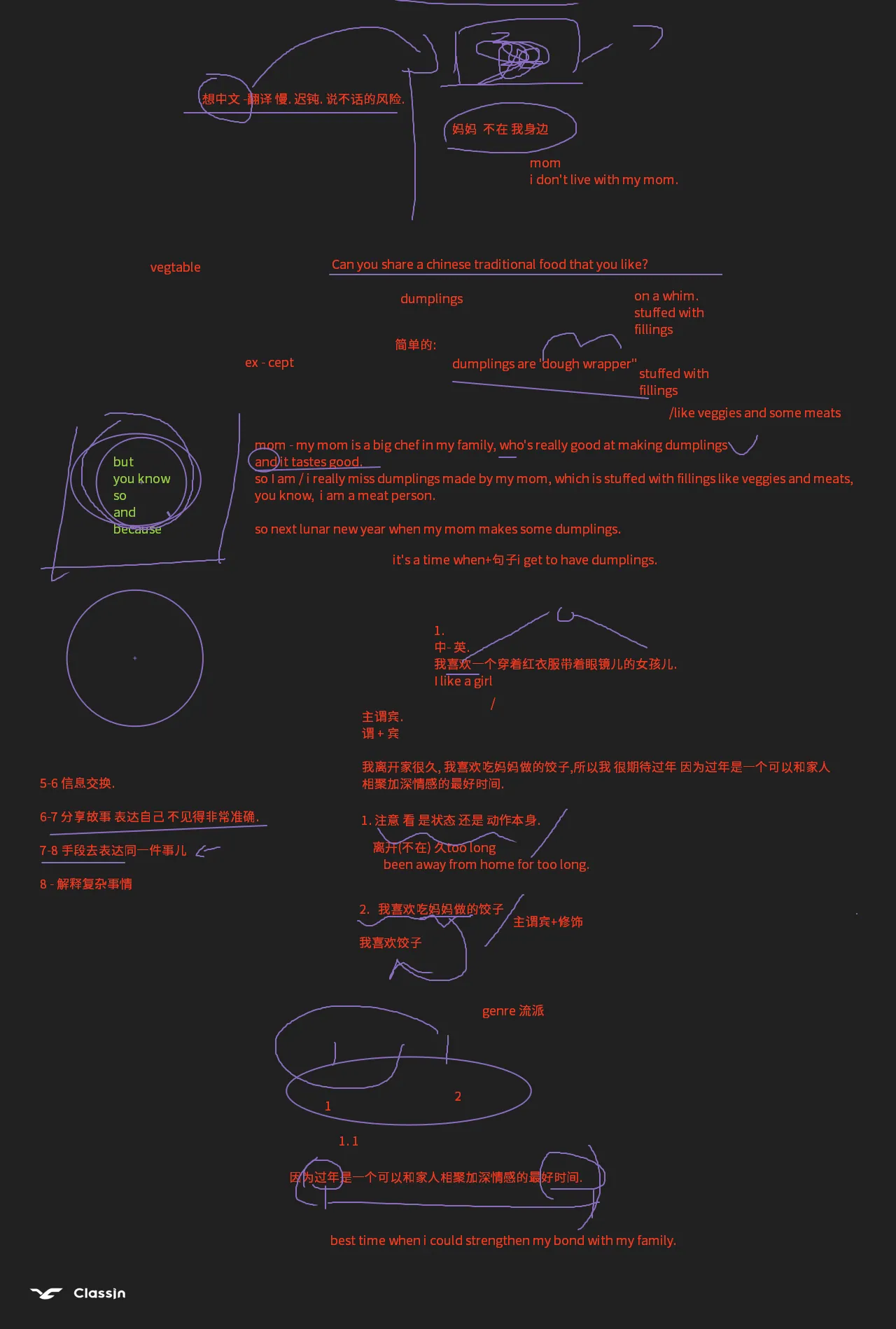
想中文 → 翻译慢、迟钝、说不话的风险
也就是说,中文不是用来"翻译"的,而是用来先在心里圈定范围的:这一段我要给的是信息、还是故事、还是解释?圈定了,英文才有一句一句往外长的方向。
板书把这个层次画了出来:
| 水平 | 干的事 |
|---|---|
| 5–6 | 信息交换 |
| 6–7 | 分享故事、表达自己(不见得非常准确) |
| 7–8 | 有手段去表达同一件事 |
| 8– | 解释复杂事情 |
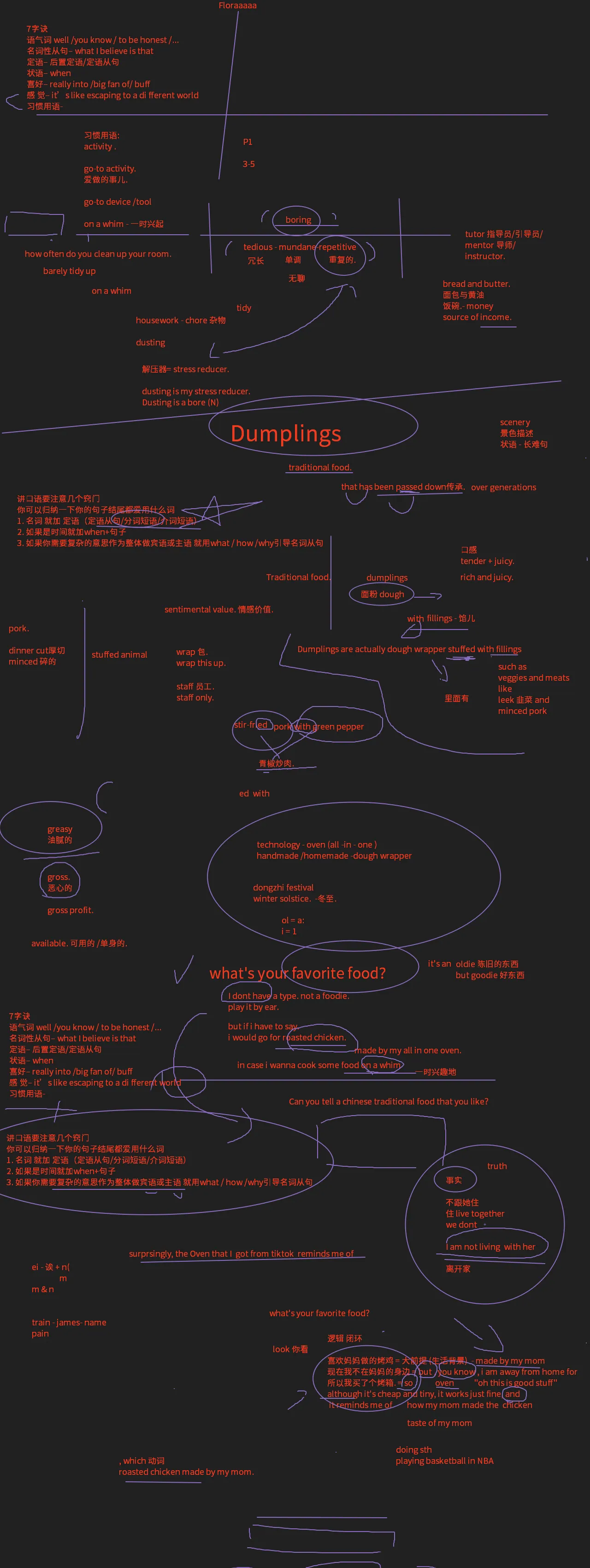
课上用两个话题走完了全程:家务 / 打扫,和饺子 · 烤鸡(中国传统食物)。
🧱 框架:7 字诀
板书把"句子怎么长出来"总结成七个字,每个字后面挂一串现成的说法:
| 字 | 管什么 | 板书上的说法 |
|---|---|---|
| 语 | 语气词 | well / you know / to be honest |
| 名 | 名词性从句 | what I believe is that ... |
| 定 | 定语 | 后置定语 / 定语从句 |
| 状 | 状语 | when |
| 喜 | 喜好 | really into / big fan of / buff |
| 感 | 感觉 | it's like escaping to a different world |
| 习 | 习惯用语 | go-to activity / go-to device / on a whim |
7 字诀的用法是"查表":说完一句话觉得太短,就翻一遍这七个字 —— 加个语气词、加个定语、加个 when,句子自然就厚了。
🧱 方法:句子结尾用的是什么词
板书留了一道"自己归纳"的题:
讲口语要注意几个窍门,你可以归纳一下你的句子结尾都用什么词。
答案给了三条:
- 名词就加定语 —— 定语从句 / 分词短语 / 介词短语
- 如果是时间就加 when + 句子
- 如果你需要复杂的意思作为整体做宾语或主语,用 what / how / why 引导名词从句
配套的"加长"演示:
| 原句 | 加完之后 |
|---|---|
| traditional food | traditional food that has been passed down over generations(传承) |
| dumplings | dumplings made by my mom |
| it's a time | it's a time when I get to have dumplings |
| a girl | I like a girl 穿着红衣服、带着眼镜儿的(中→英的练习) |
时间那一句,板书上的原话是:
it's a time when + 句子 → I get to have dumplings.
💬 饺子:一段完整的示范
问:Can you tell a chinese traditional food that you like?(板书另一处写作 Can you share a chinese traditional food that you like?)
先说最简单的一层:
dumplings are "dough wrapper" stuffed with fillings, like veggies and some meats.
(dumplings = 面皮 dough wrapper + 馅儿 fillings。板书写:里面有 such as veggies and meats, like leek 韭菜 and minced pork。)
再往上加,加成一个故事:
my mom is a big chef in my family, who's really good at making dumplings, and it tastes good.
so I really miss dumplings made by my mom, which is stuffed with fillings like veggies and meats, you know, I am a meat person.
so next lunar new year when my mom makes some dumplings ...
it's a time when I get to have dumplings.
这一段的结构很清楚: 妈妈是谁(定语从句)→ 我想念她做的饺子(分词做定语)→ 所以期待过年(时间状语)→ 过年是"能吃到饺子的时间"(when 从句)。一路都是在名词后面挂东西。
板书还标了几个可以替换的词:on a whim(一时兴起)、stuffed with fillings、except(除了)。
💬 烤鸡:一个"逻辑闭环"
板书在 what's your favorite food? 下面写了一段自我问答:
I don't have a type, not a foodie. play it by ear.
but if I have to say, I would go for roasted chicken.
it's an oldie(陈旧的东西)but goodie(好东西), made by my all-in-one oven.
in case I wanna cook some food on a whim.
然后板书把这个话题升级成一段有情绪的逻辑闭环(板书旁边写:逻辑闭环):
喜欢妈妈做的烤鸡 → 现在我不在妈妈的身边(不跟她住 live together / we don't / I am not living with her / 离开家)
you know, I am away from home for too long
所以我买了个烤箱 —— so oven
"oh this is good stuff", although it's cheap and tiny, it works just fine and reminds me of how my mom made the chicken
taste of my mom
这一段的关键在两句:made by my mom 和 reminds me of how my mom made the chicken。同一个东西(烤鸡),第一次说它是什么,第二次说它让我想起谁。板书旁边还标了一句 surprisingly, the oven that I got from tiktok reminds me of ...,以及 truth 事实 / which 动词 的提醒。
📐 语法点:是状态,还是动作本身
中译英最容易错的地方,板书写了两条:
1. 注意看是状态还是动作本身。
| 中文 | 陷阱 | 英文 |
|---|---|---|
| 我离开家(不在)很久 | "离开"是动作,"不在"是状态 | been away from home for too long |
2. 我喜欢吃妈妈做的饺子
| 层次 | 说法 |
|---|---|
| 主谓宾 + 修饰 | 我喜欢(吃)饺子 made by my mom |
先把主干(主谓宾)摆出来,再想修饰往哪儿挂。板书在"我喜欢一个穿着红衣服、带着眼镜儿的女孩儿"那句旁边,只写了三个字:
主谓宾 / 谓 + 宾
先把主干立住,再加定语。
另外板书还标了一组结构:doing sth(比如 playing basketball in NBA)—— 用现在分词表示"正在做 / 做某事"。
🔁 逻辑连接词
板书画了一个圈,把最常用的连接词放在里面:
but / you know / so / and / because
它们的作用不是"翻译",而是让话接着往下走。板书在讲饺子时就是一路 and ... so ... you know ... so ... 连下去的;在讲烤鸡时用的是 although ... and ...。
💬 课堂上的两句"高难中文"
板书专门留了一道中译英练习:
我离开家很久,我喜欢吃妈妈做的饺子,所以我期待过年,因为过年是一个可以和家人相聚加深情感的最好时间。
板书给出的落地版本是:
best time when I could strengthen my bond with my family.
(因为过年是一个可以和家人相聚、加深情感的最好时间 → 一个 when 从句就收住了。)
板书在下面还标了一组编号:1 / 2 / 1.1 —— 大意是先摆出主干,再把细节一层层挂上去。
📖 词汇与表达
家务 / 打扫
| 英文 | 中文 | 搭配 / 用法 |
|---|---|---|
| housework | 家务 | 话题词 |
| chore | 杂活 | housework - chore |
| dusting | 掸灰、擦灰 | Dusting is my stress reducer. |
| tidy up | 收拾 | barely tidy up |
| stress reducer | 解压器 | dusting is my stress reducer |
| bore | 让人厌烦的事(N) | Dusting is a bore. |
| tedious | 冗长 | 让人烦的 |
| mundane | 单调、无聊 | |
| repetitive | 重复的 | |
| boring | 无聊的 | |
| go-to activity | 爱做的事儿 | 习惯用语 |
| go-to device / tool | 常用设备 / 工具 | 习惯用语 |
| on a whim | 一时兴起 | 习惯用语 |
人物 / 身份
| 英文 | 中文 | 搭配 / 用法 |
|---|---|---|
| tutor | 指导员 / 引导员 / 导师 | |
| mentor | 导师 | |
| instructor | 教练、讲师 | |
| staff | 员工 | staff only |
| bread and butter | 面包与黄油 → 饭碗 | money / source of income |
| foodie | 吃货 | not a foodie |
| gross profit | 毛利 | gross 的另一个用法 |
食物 / 口感
| 英文 | 中文 | 搭配 / 用法 |
|---|---|---|
| dumplings | 饺子 | traditional food |
| dough | 面粉、面团 | dough wrapper 面皮 |
| dough wrapper | 面皮 | Dumplings are actually dough wrapper stuffed with fillings. |
| fillings | 馅儿 | with fillings |
| stuffing / stuffed with | 塞满 | stuffed with fillings |
| leek | 韭菜 | leek and minced pork |
| minced | 碎的 | minced pork |
| stir-fried pork with green pepper | 青椒炒肉 | |
| pork | 猪肉 | |
| tender | 嫩 | tender + juicy |
| juicy | 多汁 | rich and juicy |
| greasy | 油腻的 | |
| gross | 恶心的 | |
| sentimental value | 情感价值 | |
| oldie but goodie | 老东西但是好东西 | |
| play it by ear | 看情况、随机应变 | |
| in case | 万一 | in case I wanna cook some food on a whim |
| wrap | 包 | wrap this up |
| stuffed animal | 毛绒玩具 | |
| handmade / homemade | 手工的 / 自家做的 | handmade / homemade dough wrapper |
| winter solstice | 冬至 | dongzhi festival |
| available | 可用的;单身的 | 两个意思 |
| genre | 流派 | |
| scenery | 景色 | 景色描述用状语、长难句 |
| except | 除了 | |
| been away from home | 离家在外 | for too long |
🔊 发音要点
板书标了两处:
- 字母 n 的读音是"诶 + n";m 和 n 要分开发。
- train - James - name - pain 放在一组 —— 都是同一个元音。
- 另外还有一条提醒:l ≠ r。
⚠️ 提醒 / 易错
1. 别在心里翻译。 板书原话:想中文 → 翻译慢、迟钝、说不话的风险。中文用来画区间,不用来逐字转换。
2. 主干先立住。 说 "I like dumplings made by my mom" 之前,先能说出 "I like dumplings"。主谓宾 + 修饰这个顺序不能反。
3. 状态和动作要分清。 "离开家很久"不是 left home for a long time,而是 been away from home for too long。
4. 一个话题要有"闭环"。 只说"我喜欢吃烤鸡"是 5–6 分的信息交换;说到"烤鸡让我想起妈妈做饭的味道",才是板书说的分享故事。板书的提示是:6–7 是分享故事,表达自己不见得非常准确;7–8 是有手段去表达同一件事;8 分以上是解释复杂的事情。
5. 句子短了,就翻 7 字诀。 加语气词、加定语、加 when、加习惯用语 —— 句子是一句一句加上去的,不是一次说出来的。