📌 这节课讲了什么
这节是口语课,主线是把 P1 答得像人说话。
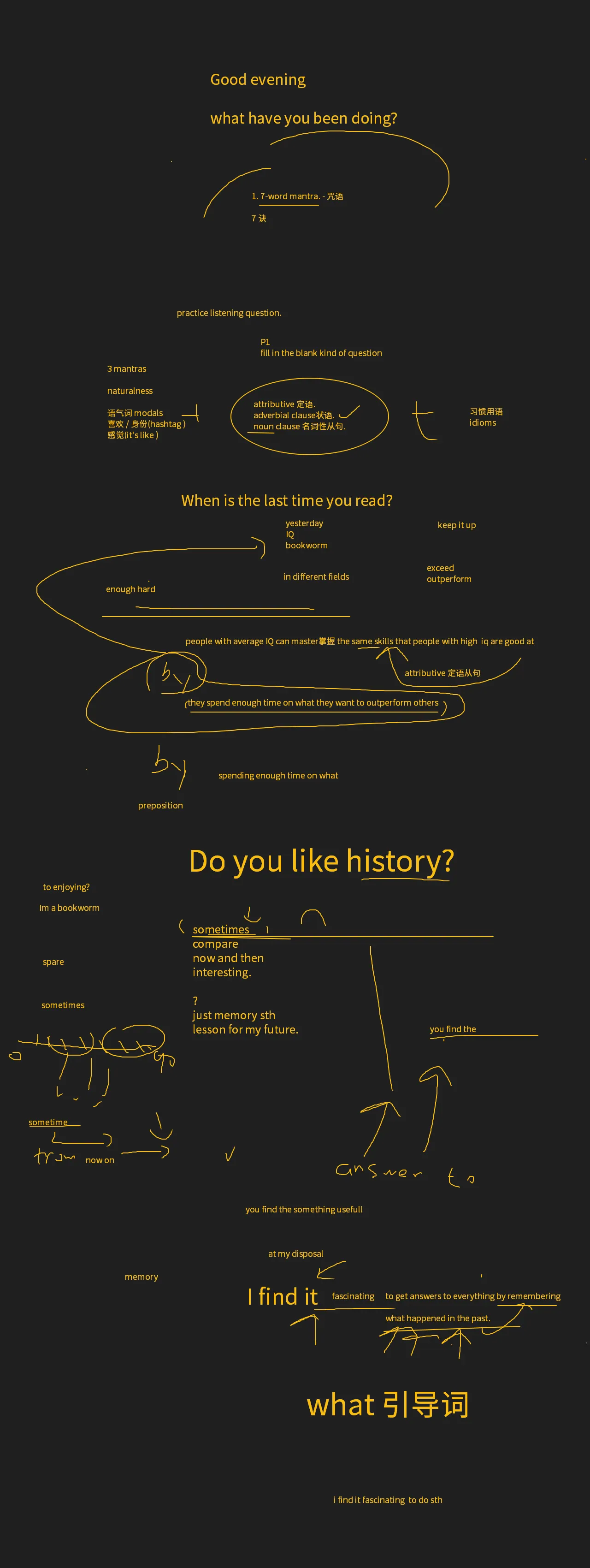
开场先练一条 7-word mantra(七个词的咒语,板书标了「咒语」两个字,下面写着「7 次」);接着用 P1 填空式的听力题做练习 —— 听是口语的输入。板书中段把一个括号拉出来,里面是三组工具:三类从句(attributive 定语 / adverbial clause 状语 / noun clause 名词性从句)、说话的自然度要素、以及习惯用语 idioms。
后半节课拿四个真实的 P1 问题轮流过了一遍,每个问题都配一句当天练出来的英文:
- When is the last time you read?
- Do you like history?
- How often do you go shopping?
- Have you ever returned anything you bought online?
整节课反复出现的核心句式只有一个:I find it fascinating to do sth.
🧱 框架:三条咒语(3 mantras)
板书用一个大括号把三组东西括起来,统称 3 mantras:
| 组 | 内容 |
|---|---|
| 一、从句三件套 | attributive 定语 / adverbial clause 状语 / noun clause 名词性从句 |
| 二、自然度 | naturalness / 语气词 + modals / 喜欢·身份(hashtag) / 感觉(it's like) |
| 三、习惯用语 | idioms |
这三组不是三个知识点,是三个可以往上堆的层:先把话说对(从句),再把话说软(语气词、情态动词、it's like 这类感觉词),最后把话说地道(idioms)。
练法:板书写的顺序是「1. 7-word mantra → 2. practice listening question(P1, fill in the blank kind of question)」。先用一句七词咒语把嘴打开,再拿 P1 的填空题练耳朵。
💬 四个 P1 问题,四句练出来的话
1. When is the last time you read?
板书在旁边记的词是:yesterday → IQ → bookworm → in different fields → keep it up → exceed → outperform。
这一题的主打句是定语从句:
people with average IQ can master the same skills that people with high IQ are good at
板书在这句下面画了箭头,标 attributive 定语从句,指的就是 that people with high IQ are good at 这一段 —— 它挂在 the same skills 后面,把「高智商的人擅长的」这个限定补上。
同一题还有第二个定语从句,板书把它圈了起来:
(they spend enough time on what they want to outperform others)
末了板书单独拎出 spending enough time on what,上面写了一个孤零零的 by,下面标 preposition —— 提醒你:by 是介词,后面接的是 spending... 这个动名词短语,介词后面得跟名词性质的东西。
2. Do you like history?
板书记的词:I'm a bookworm → sometimes → spare → compare → now and then → interesting,还写了 just memory sth / lesson for my future。
时间线是这样拉的:板书从左边的 sometimes 画了一条箭头,中间经过 now and then,指到 from now on —— 三个时间表达串成一条线,答 P1 的时候时间状语就不用临时想。
这一题的答案骨架写在板书正中:
I find it fascinating to get answers to everything by remembering what happened in the past.
find it fascinating—— find it + 形容词,it 是形式宾语,真正的宾语是后面那个to get answers to everything;by remembering what happened in the past—— by + 动名词说方式;- 板书在
what happened in the past上面标了「what 引导词」,意思是这里的 what 是个引导词,它带出来的what happened in the past整个是 remembering 的宾语。
板书把这条句式单独抽出来写在最下面一行,当成模板:
I find it fascinating to do sth.
同一题还留了两个半截说法:板书写着 you find the ___,旁边标 answer to;另一行是 you find the something useful,下面标 at my disposal。意思都是:find 后面可以接「找到的东西」,answer to / at my disposal 是给这个「东西」配的固定搭配。
3. How often do you go shopping?
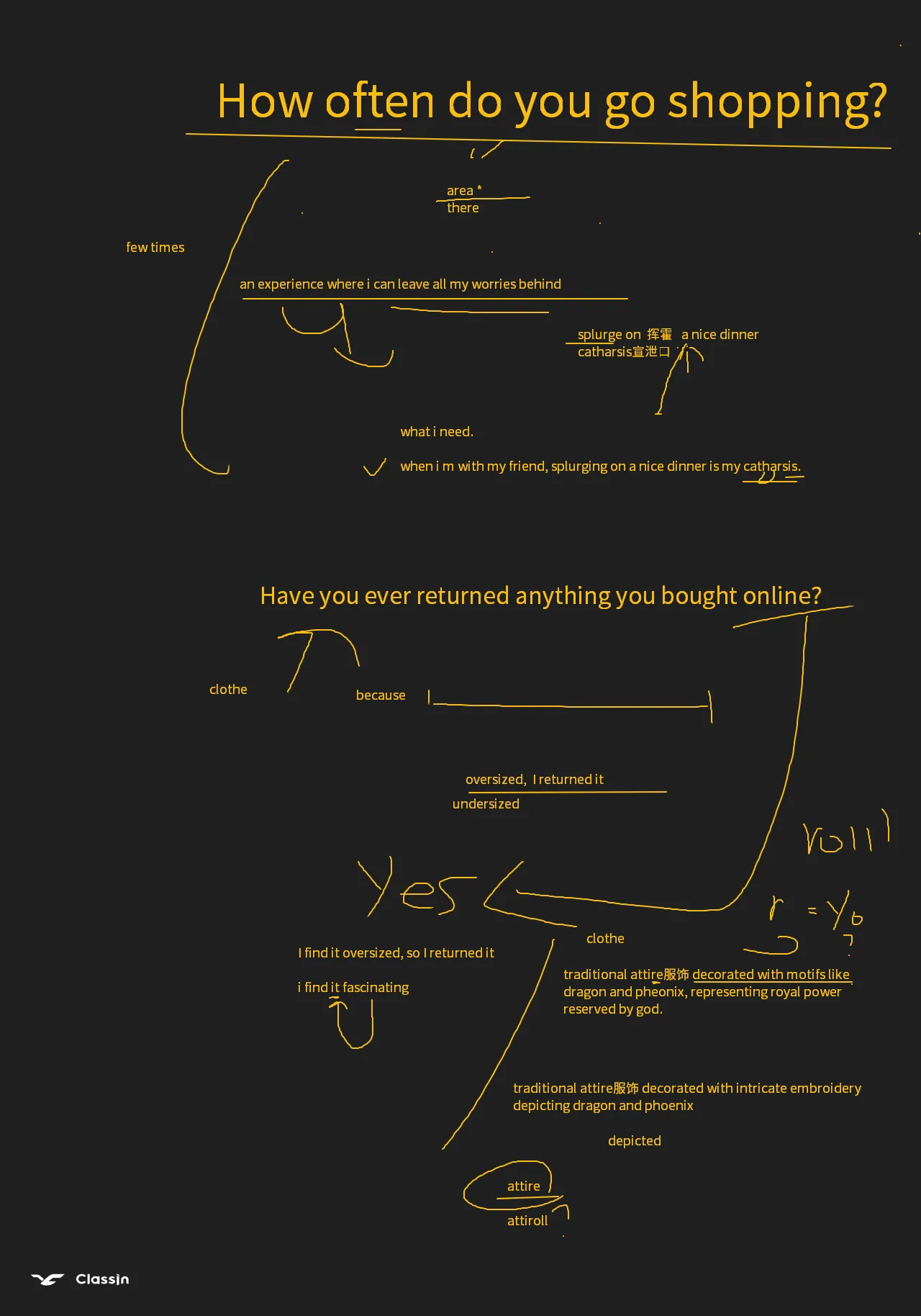
板书记的是:area / there / few times。
这一题练的是定语从句里的关系副词 where —— 修饰 experience:
an experience where I can leave all my worries behind
板书右边专门记了一个词:splurge on 挥霍(splurge on a nice dinner),以及 catharsis 宣泄 / 宣泄口。
句子是这样拼起来的:
When I'm with my friend, splurging on a nice dinner is my catharsis.
板书在这一句前面打了个勾,旁边还留了一句 what I need. —— 说的是「这就是我需要的」。
4. Have you ever returned anything you bought online?
板书记的是:clothes / because / oversized / undersized。
这一题的核心是 find it + 形容词 的另一个用法:
I find it oversized, so I returned it.
板书在 oversized 和 undersized 之间划了线,意思是这两种情况都能套 —— 「我嫌它大了 / 我嫌它小了,所以退了」。
最值得注意的是:板书用一根箭头把 I find it oversized, so I returned it 和 I find it fascinating 连在了一起 —— 同一个结构,换个形容词就是另一句话。这一课真正要背的就是这个模子。
同一题还写了服饰题的素材,两句都是过去分词后置修饰:
traditional attire 服饰 decorated with motifs like dragon and phoenix, representing royal power reserved by god.
traditional attire 服饰 decorated with intricate embroidery depicting dragon and phoenix
板书在旁边单独写了 depicted,以及 attire 这个词 —— 提醒你 decorated / depicting / reserved 这几个修饰语是同一个套路:名词后面挂一串「被……装饰/描绘」。
📖 词汇与表达
| 英文 | 中文 | 搭配 / 用法 |
|---|---|---|
| mantra | 咒语 | 7-word mantra |
| attributive | 定语 | attributive clause 定语从句 |
| adverbial clause | 状语从句 | |
| noun clause | 名词性从句 | |
| idiom | 习惯用语 | 板书右栏单独列出 |
| naturalness | 自然度 | 三 mantra 之一 |
| modal | 情态动词 | 语气词 + modals |
| hashtag | 话题标签 | 喜欢 / 身份(hashtag) |
| bookworm | 书虫 | I'm a bookworm. |
| IQ | 智商 | people with average IQ |
| keep it up | 保持下去 | |
| in different fields | 在不同领域 | |
| exceed | 超过 | |
| outperform | 胜过、比…强 | outperform others |
| spare | 空闲的 | spare time |
| now and then | 时不时 | 和 sometimes 并列 |
| compare | 比较 | compare now and then |
| from now on | 从今往后 | 板书箭头的时间落点 |
| at my disposal | 任我支配 | you find the something useful at my disposal |
| answer to | ……的答案 | answers to everything |
| splurge on | 挥霍、狠花一笔 | splurge on a nice dinner |
| catharsis | 宣泄、宣泄口 | is my catharsis |
| attire | 服饰 | traditional attire |
| motif | 纹样 | motifs like dragon and phoenix |
| dragon and phoenix | 龙与凤 | |
| royal power | 王权 | representing royal power |
| intricate embroidery | 精细刺绣 | decorated with intricate embroidery |
| depict | 描绘 | depicting dragon and phoenix |
| oversized | 偏大 | I find it oversized |
| undersized | 偏小 | |
| clothes | 衣服 | 板书先写了 clothe,正字是 clothes |
⚠️ 提醒 / 易错
1. 这一课的全部重量都在一个句式上
I find it + 形容词 + to do sth / that...
it 是形式宾语,真正的宾语在后面。fascinating 可以换成 oversized / undersized,甚至换成别的形容词,句子照样成立 —— 板书用箭头把两个例子连起来,就是在说这件事。
2. 名词后面挂从句,先看它缺什么
| 板书上的例子 | 从句类型 | 说明 |
|---|---|---|
| the same skills that people with high IQ are good at | 定语从句 | 关系代词 that 指 skills |
| an experience where I can leave all my worries behind | 定语从句 | 关系副词 where 指 experience 这一类「场合」 |
| remembering what happened in the past | 名词性从句 | what 是引导词,整块做 remembering 的宾语 |
3. 介词后面要跟名词性质的东西
板书在 spending enough time on what... 上面单独写了个 by,下面标 preposition —— by 后面接动名词,on 后面接 what 引导的从句。介词是这一类句子的关节,别在这儿断掉。
4. 说话要有「软」的部分
三 mantra 里的第二组是这一课的态度:naturalness。做法是往里塞语气词和 modals、塞 it's like 这种「感觉」的说法、塞「我是谁 / 我喜欢什么」的身份标签(hashtag)。板书把这一组和从句、idioms 并列,说明它和语法一样是必答题,不是装饰。