📌 这节课讲了什么
一句话:句子的核心意思在动词上。 听 Section 4 的时候,不要追着名词跑,先抓动词,名词答案自己会浮出来。
课上用两篇 Section 4 笔记填空做了实证:
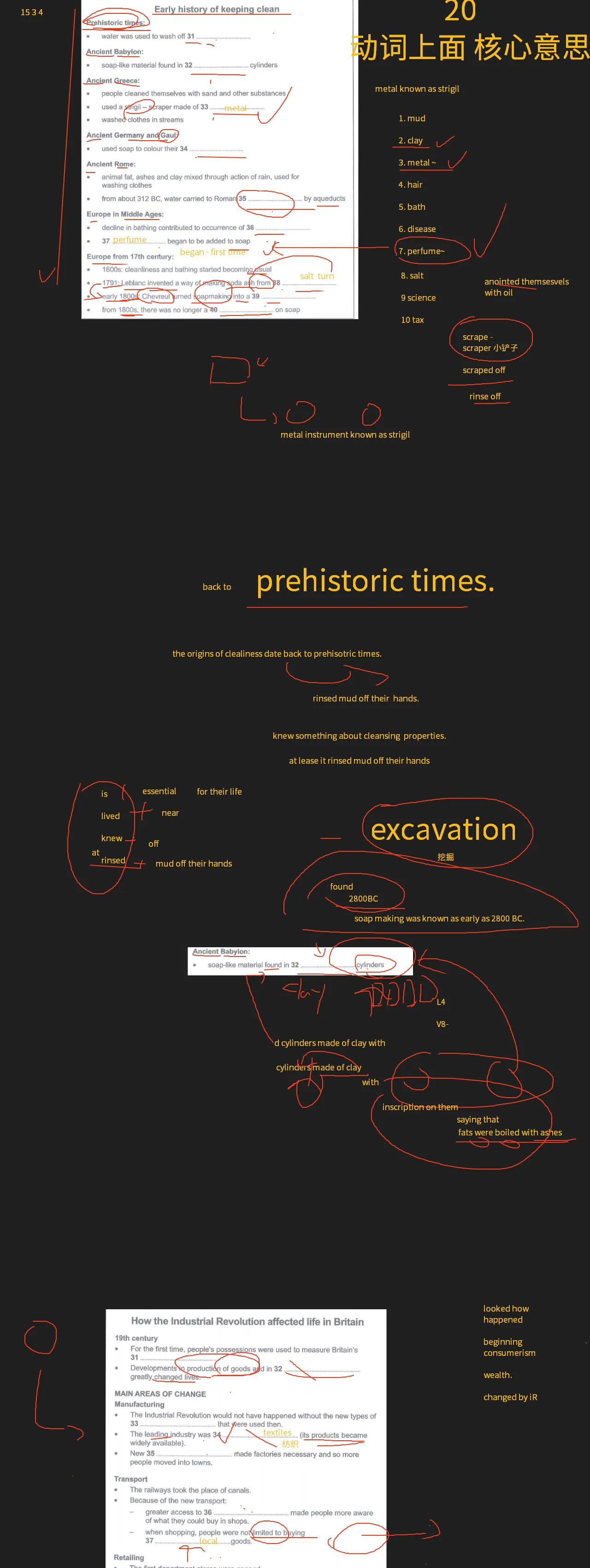
- Early history of keeping clean(从史前到 19 世纪,人类怎么清洁自己)
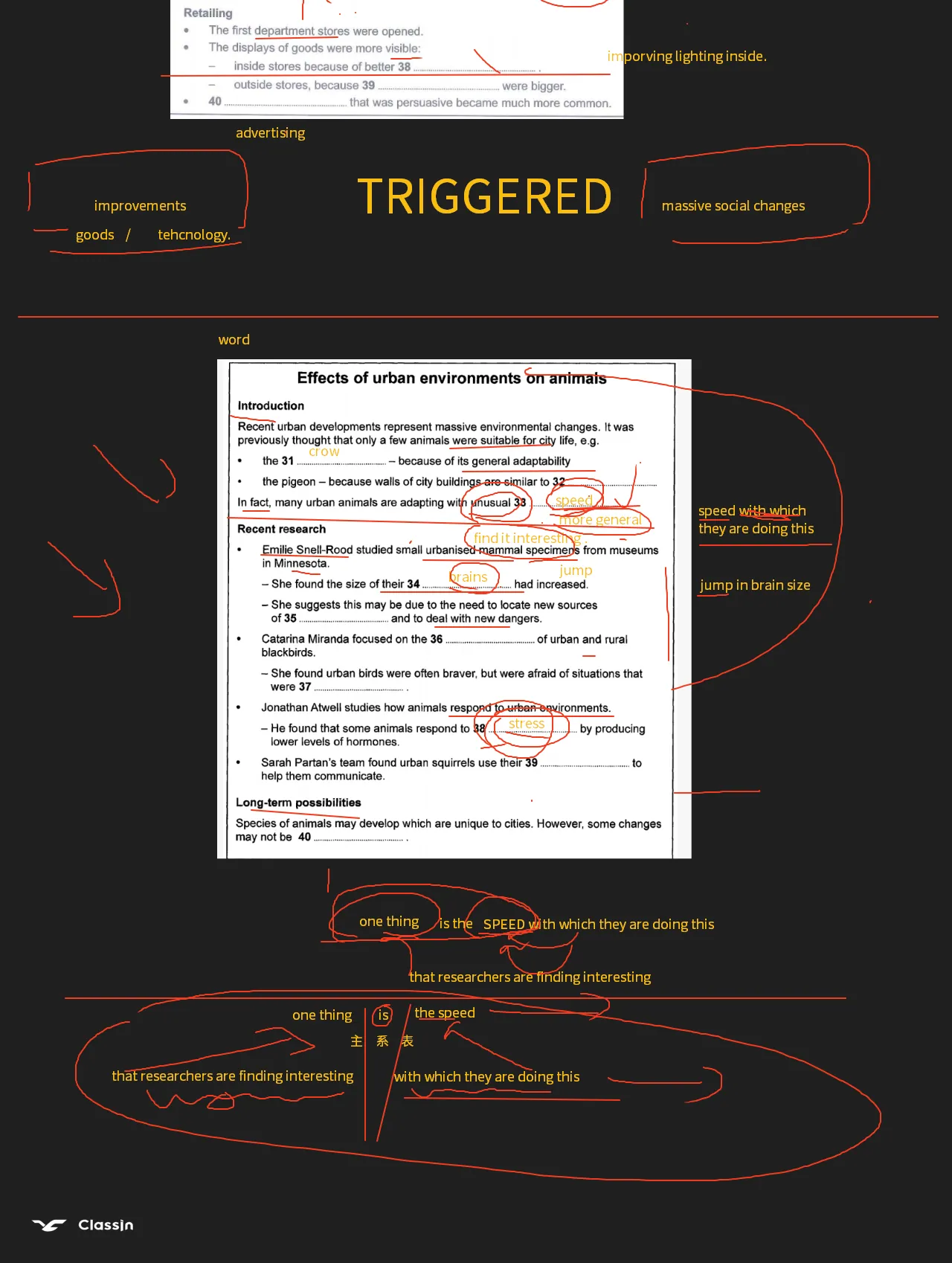
- How the Industrial Revolution affected life in Britain(工业革命怎么改变了英国人的生活:制造业 / 交通 / 零售)
🧱 方法:动词做跳跃点
一个句子有几个谓语动词,就有几个分句。听的时候把动词当跳板,一个动词一个动词往下跳。
以 Early history of keeping clean 为例,整篇的动词链是:
water was used to wash off → material found → cleaned themselves with → made of → washed clothes in streams → used soap to colour → mixed through action of rain → water carried to Rome → contributed to → began to be added → started becoming usual → invented a way → turned soapmaking into → no longer a tax
答案全部挂在动词后面。 动词听住了,空格就不慌。
🧱 方法:分层级
录音里同一个意思会分几层说,层级要听得出来:
| 层级 | 例句 |
|---|---|
| 直接陈述 | Soap making was known as early as 2800 BC. |
| 加限定 | At least it rinsed mud off their hands. |
| 加评价 | They knew something about cleansing properties. |
| 溯源 | The origins of cleanliness date back to prehistoric times. |
💬 课上精听的句子(可直接背)
The origins of cleanliness date back to prehistoric times.
They rinsed mud off their hands.
They knew something about cleansing properties.
Soap making was known as early as 2800 BC.
Water is essential for their life.
Cylinders made of clay, with an inscription on them saying that fats were boiled with ashes.
最后这句是典型的「名词 + 后置修饰套后置修饰」——听力里答案常常就藏在 with / saying that 后面。
📖 这节课的词
| 英文 | 中文 | 备注 |
|---|---|---|
| mud | 泥 | wash off mud |
| clay | 黏土 | cylinders made of clay |
| metal | 金属 | a metal instrument |
| hair | 头发 | used soap to colour their hair |
| bath | 洗澡 | decline in bathing |
| disease | 疾病 | 洗澡变少 → 疾病增加 |
| perfume | 香水 | 开始被加进肥皂里 |
| salt | 盐 | soda ash from salt |
| science | 科学 | soapmaking 变成一门科学 |
| tax | 税 | 1800 年代以后肥皂不再被课税 |
| scrape / scraper | 刮 / 小铲子 | scraped off, rinse off |
| strigil | 刮身板 | 古希腊罗马的金属刮具 |
| excavation | 挖掘 | 考古发掘 |
| anoint ... with oil | 涂油 | anointed themselves with oil |
| textiles | 纺织 | 工业革命的龙头行业 |
| local goods | 本地货 | 以前购物只能买本地货 |
⚠️ 听力里要盯住的改写
| 题目可能这么写 | 录音其实是这么说 |
|---|---|
| for the first time | began · first time |
| greatly changed | changed by IR(the Industrial Revolution) |
| its products became widely available | (纺织业)products became widely available |
| people were not limited to buying ___ | 以前只能买 local goods |
| the displays of goods were more visible | 店内因为 "better ",店外因为 " were bigger" |
两个固定动作:
- 听到
because of/because,一定要等后面那个名词 —— 原因常常才是答案位; - 看到空格后面是
were bigger这类复数谓语,答案基本锁定复数名词。
⚠️ 提醒
丢分点不在词汇,在动词没跳稳:
- 一句话里第二个动词出现时,说明分句换了,注意力要跟着换;
- 不要停在没听懂的名词上,继续跟动词走,后面的信息会把前面的补上。