📌 这节课讲了什么
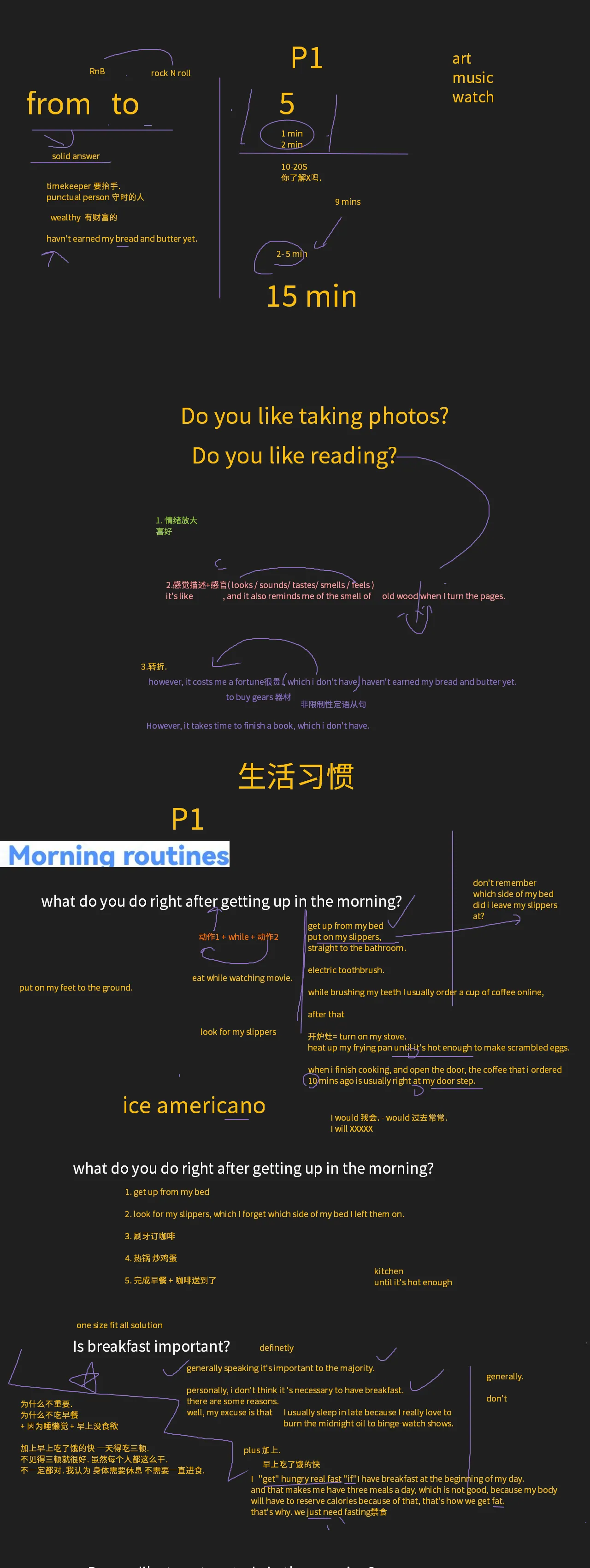
这是一节 P1 口语课,主题是生活习惯(板书上的标题是 Morning routines)。
课上做了四件事:
- 先把 P1 的时间节奏对了一遍 —— 每个小问大概答多久、整段大概多长,板书画了一条时间轴;
- 用 Do you like taking photos? / Do you like reading? 讲清「喜好类」P1 的三步走:情绪放大 → 感觉描述 → 转折;
- 把四个具体话题各串成一段能背的答案:早起、购物、整洁,外加 Is breakfast important? 这种「先大众、后自己」的答法;
- 板书单开了一块 EXPLAIN yourself,练几个容易含混的音。
这节课的答案全部围绕「生活习惯」这个大话题,答的时候思路是:先说动作,再说理由,最后用 which 补一刀。
⏱️ 先对一下时间:P1 的节奏
板书左上角画了一条时间轴,写的是这些数字:
| 板书上的位置 | 内容 |
|---|---|
| 大标题 P1 下面 | 5 |
| 一个圆圈里 | 1 min / 2 min |
| 圆圈下方的标注 | 10-20s —— 你了解 X 吗 |
| 再往下 | 9 mins |
| 一个圈里 | 2-5 min |
| 最下面的大字 | 15 min |
其中 10-20s 那一行写得最清楚:它对应「你了解 X 吗」这类小问,也就是说 P1 里每个小问的回答长度,是按 10 到 20 秒来准备的。
同一条轴的右边,另外起了一列,写的是三个词:
art music watch
再往上的左上角,板书给了 from ... to ... 这个句式。上面写着 RnB 和 rock N roll,中间画了一道弧线把两个词连起来,样子就是:
from RnB to rock N roll
下面划了一道线,线那头标着 solid answer —— 一个站得住的回答,就是把话说满、说到位。
🧱 框架:喜好类 P1 的三步走
板书用两个问句起的头:
Do you like taking photos? Do you like reading?
答案按三步搭:
第一步:情绪放大,先讲「喜好」
这一步不是讲道理,是把喜欢的情绪放大。板书这一条只写了四个字:情绪放大,底下一行是 喜好。
第二步:感觉描述 + 感官
从感受切进去。板书列了五个感官动词:
| 感官动词 | 对应 |
|---|---|
| looks | 看起来 |
| sounds | 听起来 |
| tastes | 尝起来 |
| smells | 闻起来 |
| feels | 摸起来 / 感觉起来 |
句式是:
it's like ______ , and it also reminds me of the smell of old wood when I turn the pages.
前半句用 it's like 起一个比喻,后半句用 it also reminds me of ... 把感官接上去。板书特意把 the smell of old wood 圈出来,后面跟着 when I turn the pages —— 翻书页时的旧木头味,这就是「感觉描述」落到实处的样子。
第三步:转折,用 which 补一刀
这一步是转。板书写了两个 however,后面接的都是非限制性定语从句:
however, it costs me a fortune 很贵, which I don't have / haven't earned my bread and butter yet. to buy gears 器材
这句话的结构是:先说「它花了我一大笔钱」,再用 which I don't have 补一句「而我没有」,后面还能再叠一层 haven't earned my bread and butter yet(还没挣到自己的面包黄油)。板书在旁边标了四个字:非限制性定语从句。
注意 gears(器材)是放在句尾的,说明花钱是为了买器材。
同一招换个话题还能再用一次:
However, it takes time to finish a book, which I don't have.
「看书要花时间,而我没有时间」—— 前半句陈述,后半句用 which 把「我缺什么」补上,一句话就把转折说完了。
💬 早晨那条动作链:一句话说完起床后的十分钟
话题页上写的是:
what do you do right after getting up in the morning?
板书给的是一条按时间顺序排下来的动作链,从左到右、从上到下:
get up from my bed put on my slippers, straight to the bathroom. electric toothbrush. while brushing my teeth I usually order a cup of coffee online, after that 开炉灶 = turn on my stove. heat up my frying pan until it's hot enough to make scrambled eggs. when I finish cooking, and open the door, the coffee that I ordered 10 mins ago is usually right at my door step.
这条链的关节词是 after that 和 when I finish cooking;中间夹了一个 while 结构,把两件事并起来做:
动作1 + while + 动作2
板书举的例子是:
eat while watching movie.
也就是「一边做 A 一边做 B」。刷牙和下单咖啡就是用这个结构并起来的。
板书左边还给了另一个切入口:
put on my feet to the ground. look for my slippers
配的问句是:
don't remember which side of my bed did I leave my slippers at?
「不记得把拖鞋落在床的哪一边了」—— 一个小细节就把早晨的画面撑起来了。
最后的成稿,板书缩成了五步:
| 步骤 | 内容 |
|---|---|
| 1 | get up from my bed |
| 2 | look for my slippers, which I forget which side of my bed I left them on. |
| 3 | 刷牙 订咖啡 |
| 4 | 热锅 炒鸡蛋 |
| 5 | 完成早餐 + 咖啡送到了 |
第 2 步是全篇最值得抄的一句 —— 它用了和前面 which 一样的补刀手法:
look for my slippers, which I forget which side of my bed I left them on.
板书右侧单独留了两个提示词:kitchen 和 until it's hot enough。热锅那句的完整样子是 heat up my frying pan until it's hot enough to make scrambled eggs,until 后面的 it's hot enough 就是判断能不能下锅的那条线。
另外板书圈了一个词:ice americano;还写了一条 would 的用法对照:
I would 我会. would 过去常常. I will xxxxx
🧱 框架:Yes/No 题怎么答 —— 先大众,后自己
话题页:
Is breakfast important?
板书先在题目前面写了一句 one size fit all solution,右边补了一个词 definitely。
答案分三层:
第一层,讲大众:
generally speaking it's important to the majority.
第二层,讲自己:
personally, i don't think it's necessary to have breakfast. there are some reasons. well, my excuse is that I usually sleep in late because I really love to burn the midnight oil to binge-watch shows.
第三层,再补一个理由:
plus 加上. I "get" hungry real fast "if" I have breakfast at the beginning of my day, and that makes me have three meals a day, which is not good, because my body will have to reserve calories because of that, that's how we get fat. that's why. we just need fasting 禁食
板书用引号把 get 和 if 标出来了,这两个词是要重读的地方。
中文提纲板书也写得清清楚楚,这就是这段话的思路来源:
- 为什么不重要 / 为什么不吃早餐
-
- 因为睡懒觉 + 早上没食欲
- 加上早上吃了饿的快,一天得吃三顿
- 不见得三顿就很好,虽然每个人都这么干,不一定都对
- 我认为身体需要休息,不需要一直进食
注意第三层的逻辑链:吃早餐 → 饿得快 → 一天吃三顿 → 身体要 reserve calories(囤热量)→ 变胖。句子里连着用了 which、because、that's how 把这一串串起来,最后落在 that's why. we just need fasting,收得干脆。
板书右侧还单独留了两个词:generally. 和 don't —— 一个用来起头(讲大众),一个用来表态(讲自己)。
🧱 框架:it depends 型 —— Do you like to get up early
题目:
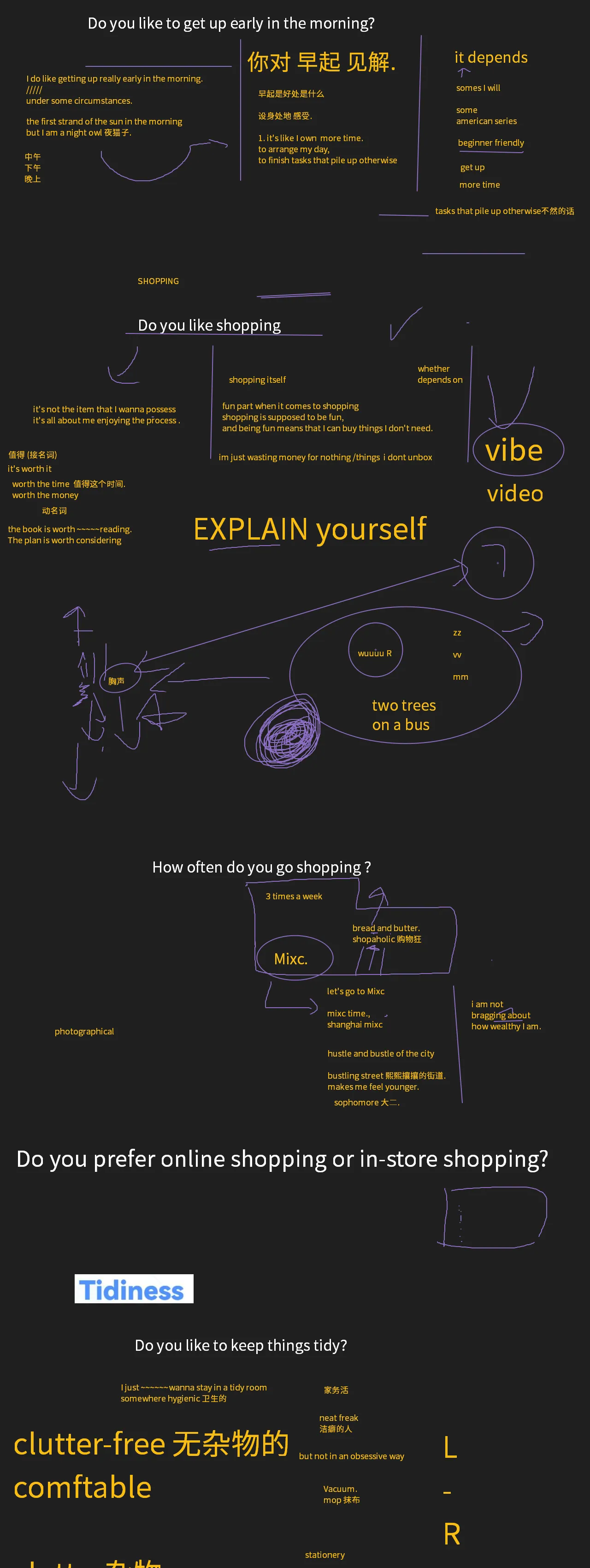
Do you like to get up early in the morning?
板书给的答法是先给一个带条件的「喜欢」:
I do like getting up really early in the morning. ///// under some circumstances. the first strand of the sun in the morning but I am a night owl 夜猫子.
第一句说完之后,板书用一排斜线划开,再用 under some circumstances(在某些情况下)把话收回来 —— 这就给后面的转折留了位置。the first strand of the sun(清晨第一缕阳光)是画面,后面立刻接 but I am a night owl。
板书左边还留了三个时间词:中午 / 下午 / 晚上 —— 夜猫子的作息就是这么排下来的。
中间一栏标题是「你对早起见解」,底下两行提示:早起是好处是什么、设身处地 感受。跟着的答案:
- it's like I own more time. to arrange my day, to finish tasks that pile up otherwise
「早起就像我多出了一点时间,可以安排一天,把那些不然会堆起来的任务做掉」。板书在 tasks that pile up otherwise 后面标了中文:不然的话。
右边一栏是这类「看情况」答案的关键词库,it depends 下面写着:
somes I will some american series beginner friendly get up more time tasks that pile up otherwise 不然的话
再往下另起一列,是 whether 和 depends on —— 这两个词就是「看情况」的标准搭子。
🛍️ Shopping:从「喜欢买」到「多久买一次」
Do you like shopping
板书给了两句核心:
it's not the item that I wanna possess it's all about me enjoying the process.
不是「东西」本身,而是「买的这个过程」。板书在旁边专门讲了 worth 的两种接法:
| 接什么 | 例子 | 意思 |
|---|---|---|
| 接名词 | it's worth it / worth the time / worth the money | 值得 / 值得这个时间 / 值得这个钱 |
| 接动名词 | the book is worth reading. / The plan is worth considering | 值得读 / 值得考虑 |
「值得」后面接动作的时候,动词要用 -ing。
接着往下推一层:
shopping itself fun part when it comes to shopping shopping is supposed to be fun, and being fun means that I can buy things I don't need. im just wasting money for nothing / things I don't unbox
从「购物本身」到「购物好玩的部分」,再到 being fun means that ... 把「好玩」定义成「可以买用不上的东西」,最后自嘲一句 im just wasting money for nothing。板书在右边圈了两个词:vibe 和 video。
How often do you go shopping ?
3 times a week
板书画了个框把 Mixc. 圈起来,周围散着这些词:
bread and butter. shopaholic 购物狂 let's go to Mixc mixc time., shanghai mixc hustle and bustle of the city bustling street 熙熙攘攘的街道. makes me feel younger. sophomore 大二.
hustle and bustle of the city 和 bustling street 是配套的一组:城市的熙熙攘攘 / 熙熙攘攘的街道。后面接 makes me feel younger. 和 sophomore 大二. —— 说明说话人的身份是「大二学生」。
板书最右边单独写了一行:
i am not bragging about how wealthy i am.
「我不是在炫富」—— 前面出现过 wealthy,这里用 brag about 把它翻成了自嘲的口吻。同一个位置还留了 photographical 这个词。
Do you prefer online shopping or in-store shopping ?
板书上只有这一句问句,旁边画了一个空的方框,里面没有写内容。
🧹 Tidiness:整洁这个话题
话题页:
Do you like to keep things tidy?
板书给的答案:
I just ~~~~~wanna stay in a tidy room somewhere hygienic 卫生的
中间那串波浪线是板书留的白,意思是这里可以根据自己情况换词。
围绕「整洁」,板书记了一串词:
- clutter-free 无杂物的
- comfortable
- 家务活
- neat freak 洁癖的人
- but not in an obsessive way —— 但不是强迫症那种
- Vacuum.
- mop 抹布
- stationery
- canvas
- clutter 杂物
neat freak 后面立刻跟一句 but not in an obsessive way,是给自己留余地的说法:爱干净,但没到那个程度。到了第三张切片,板书的最后一行就是 clutter 杂物.,下面还挂着 stationery 和 canvas。
🔊 发音:EXPLAIN yourself
板书中间单开了一大块,标题是 EXPLAIN yourself,画了几个圈,里面写的是要练的音:
| 板书上的写法 | 位置 |
|---|---|
| wu u u u R | 圈在一个小圈里 |
| zz | 右侧竖排 |
| vv | 右侧竖排 |
| mm | 右侧竖排 |
| two trees on a bus | 圈在一个大圈里 |
| 胸声 | 左边圈出来的中文 |
wu u u u R 是把 w 和 r 放在一起拉长练;zz / vv / mm 是一组要单独过的辅音;two trees on a bus 是要连着说顺的一句;胸声是老师圈的发音位置提醒。
这一块左边的线条是老师画的口型示意图,线迹交叠,已经看不出来具体形状,这里只能记下写在旁边的字。
📖 词汇与表达
| 英文 | 中文 | 搭配 / 用法 |
|---|---|---|
| solid answer | 站得住的回答 | from ... to ... 之后的一个标注 |
| timekeeper | 计时员 | 板书旁注:要抬手 |
| punctual person | 守时的人 | |
| wealthy | 有财富的 | i am not bragging about how wealthy i am. |
| haven't earned my bread and butter yet | 还没挣到自己的饭碗 | 接在 which I don't have 后面 |
| bread and butter | 面包和黄油;饭碗 | |
| it costs me a fortune | 花了我一大笔钱 | 很贵 |
| gears | 器材 | to buy gears |
| it's worth it | 值得 | 接名词:worth the time / worth the money |
| worth considering | 值得考虑 | 接动名词:The plan is worth considering |
| possess | 拥有 | it's not the item that I wanna possess |
| unbox | 拆箱 | things I don't unbox |
| shopaholic | 购物狂 | |
| hustle and bustle of the city | 城市的熙熙攘攘 | |
| bustling street | 熙熙攘攘的街道 | |
| sophomore | 大二 | |
| brag about | 吹嘘 | i am not bragging about how wealthy i am. |
| photographical | 摄影的、与拍照有关的 | 板书在 How often 一栏单独留的一个词 |
| vibe | 氛围、感觉 | 板书圈出 |
| get up from my bed | 从床上起来 | 早晨动作链第 1 步 |
| put on my slippers | 穿上拖鞋 | |
| electric toothbrush | 电动牙刷 | |
| straight to the bathroom | 直接去洗手间 | |
| turn on my stove | 开炉灶 | |
| frying pan | 煎锅 | heat up my frying pan |
| scrambled eggs | 炒鸡蛋 | until it's hot enough to make scrambled eggs |
| door step | 门口台阶 | right at my door step |
| ice americano | 冰美式 | 板书圈出 |
| night owl | 夜猫子 | but I am a night owl |
| the first strand of the sun | 清晨第一缕阳光 | |
| burn the midnight oil | 熬夜 | |
| binge-watch | 刷剧 | binge-watch shows |
| sleep in late | 睡懒觉 | |
| reserve calories | 囤积热量 | my body will have to reserve calories |
| fasting | 禁食 | we just need fasting |
| it depends | 看情况 | |
| whether | 是否 | 和 depends on 搭配 |
| tasks that pile up | 堆起来的任务 | otherwise = 不然的话 |
| beginner friendly | 对新手友好 | |
| one size fit all solution | 一刀切的答案 | 写在 Is breakfast important? 前面 |
| definitely | 当然、肯定 | |
| generally speaking | 一般说来 | |
| the majority | 大多数人 | important to the majority |
| tidy | 整洁 | keep things tidy |
| hygienic | 卫生的 | somewhere hygienic |
| clutter-free | 无杂物的 | |
| clutter | 杂物 | 第三张切片的最后一行 |
| comfortable | 舒服的 | |
| neat freak | 洁癖的人 | but not in an obsessive way |
| obsessive | 强迫症似的 | |
| Vacuum. | 吸尘 | |
| mop | 抹布 | |
| stationery | 文具 | |
| canvas | 帆布 | |
| (板书未给英文) | 家务活 | 整洁话题下的一条,板书只写了中文 |
⚠️ 提醒 / 易错
1. which 是这节课出现最多的一招,专门用来「补一刀」
however, it costs me a fortune, which I don't have. However, it takes time to finish a book, which I don't have. look for my slippers, which I forget which side of my bed I left them on.
前半句把话说完,后半句用 which 把「缺什么 / 忘了什么」补上。板书把这一条标成了非限制性定语从句。
2. worth 后面接什么,看它接的是名词还是动作
- 接名词:it's worth it / worth the time / worth the money
- 接动作:动词必须用 -ing —— the book is worth reading. / The plan is worth considering.
3. 两个动作并着做,用 while
动作1 + while + 动作2 eat while watching movie. while brushing my teeth I usually order a cup of coffee online
4. 板书写错的拼写,这里改过来
| 板书 | 正确 |
|---|---|
| definetly | definitely |
| comftable | comfortable |
5. 引号是重读标记
I "get" hungry real fast "if" I have breakfast at the beginning of my day.
板书上用引号圈出来的词,是说话时要加重的地方。
6. 不要背「万能答案」
板书写了 one size fit all solution(一刀切的答案)。同一道 Is breakfast important?,板书给的顺序永远是:先 generally speaking 讲大众怎么看,再 personally 讲自己怎么看,最后用 plus 补一层理由 —— 顺序不能颠倒。
7. 逻辑链要一口气说完
吃早餐 → 饿得快 → 一天吃三顿 → 身体囤热量 → 变胖,这一串板书用 which / because / that's how / that's why 串成了一条线,中间断掉就散了。