📌 这节课讲了什么
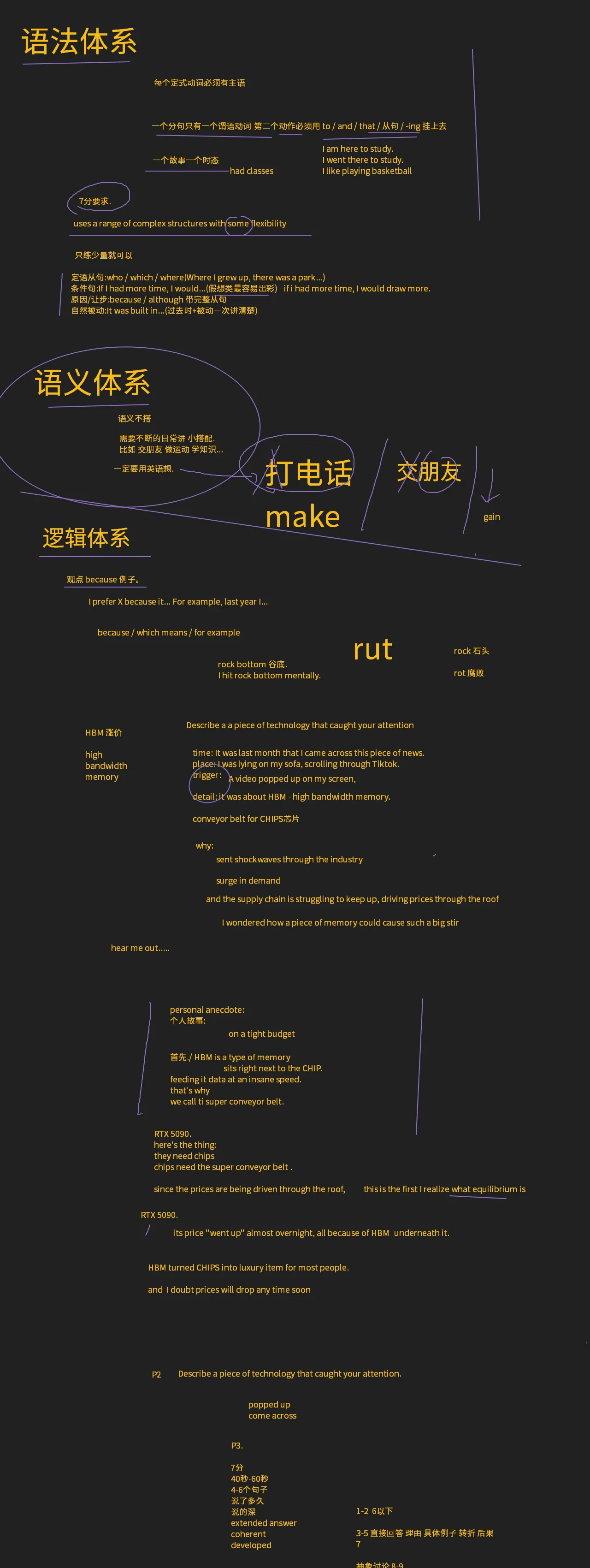
这是一节总纲课。老师把「说出一句正常的英语」拆成三大体系 —— 语法体系、语义体系、逻辑体系,一句话概括就是:没有基本的因为所以,就不可能有正常的表达。
- 语法体系管句子站不站得住:每个定式动词必须有主语;一个分句只有一个谓语动词,第二个动作必须用 to / and / that / 从句 / -ing 挂上去;一个故事一个时态。
- 语义体系管词和词搭不搭:得靠平时不断讲小搭配一点点攒,比如交朋友、做运动、学知识;而且要一定要用英语想。
- 逻辑体系管观点怎么落地:观点 because 例子。
课上用两个话题把三大体系走了一遍:一个是 HBM 涨价(Describe a piece of technology that caught your attention),一个是 为什么有人抢着买最新的科技产品(Why do some people rush to buy the latest tech products)。并列句和从属连词这两块,全程用「买东西」这个话题反复造句。
🧱 总纲:三大体系各管什么
| 体系 | 板书记的要点 | 一句话理解 |
|---|---|---|
| 语法体系 | 每个定式动词必须有主语 / 一个分句只有一个谓语动词 / 一个故事一个时态 / 7 分要求 uses a range of complex structures with some flexibility | 句子先得立得住 |
| 语义体系 | 语义不搭 / 需要不断的日常讲小搭配 / 一定要用英语想 | 词和词得搭得上 |
| 逻辑体系 | 观点 because 例子 / I prefer X because it... For example, last year I... / because / which means / for example | 话得接得下去 |
📐 语法体系(一):三条底线
1. 每个定式动词必须有主语。
没有主语,这个动词就悬在半空,整句都不成立。
2. 一个分句只有一个谓语动词,第二个动作必须用 to / and / that / 从句 / -ing 挂上去。
这是整节课最要紧的一条。板书写得很明确:第二个动作不能直接再上一个谓语动词,必须用五个挂钩之一挂上去 —— to / and / that / 从句 / -ing。板书给的三个样子:
I am here to study.
I went there to study.
I like playing basketball.
3. 一个故事一个时态。
板书旁边标了一个 had classes —— 讲同一件事,时态不要中途换。
📐 语法体系(二):7 分要求,只练少量就可以
板书把 7 分的评分原话写了下来:
uses a range of complex structures with some flexibility
(其中 some 被圈了出来。)
紧接着一句中文:只练少量就可以。 板下列了四个句型,属于「练少量就够用」的那一类:
| 句型 | 板书记的 |
|---|---|
| 定语从句 | who / which / where(Where I grew up, there was a park...) |
| 条件句 | If I had more time, I would...(假想类最容易出彩)—— if I had more time, I would draw more. |
| 原因 / 让步 | because / although 带完整从句 |
| 自然被动 | It was built in...(过去时 + 被动 一次讲清楚) |
注意最后两条合起来是一条:because / although 后面要带一个完整的句子;被动放在过去时里一起讲清楚,不要单独背。
📐 语法体系(三):并列句 —— 平等连接
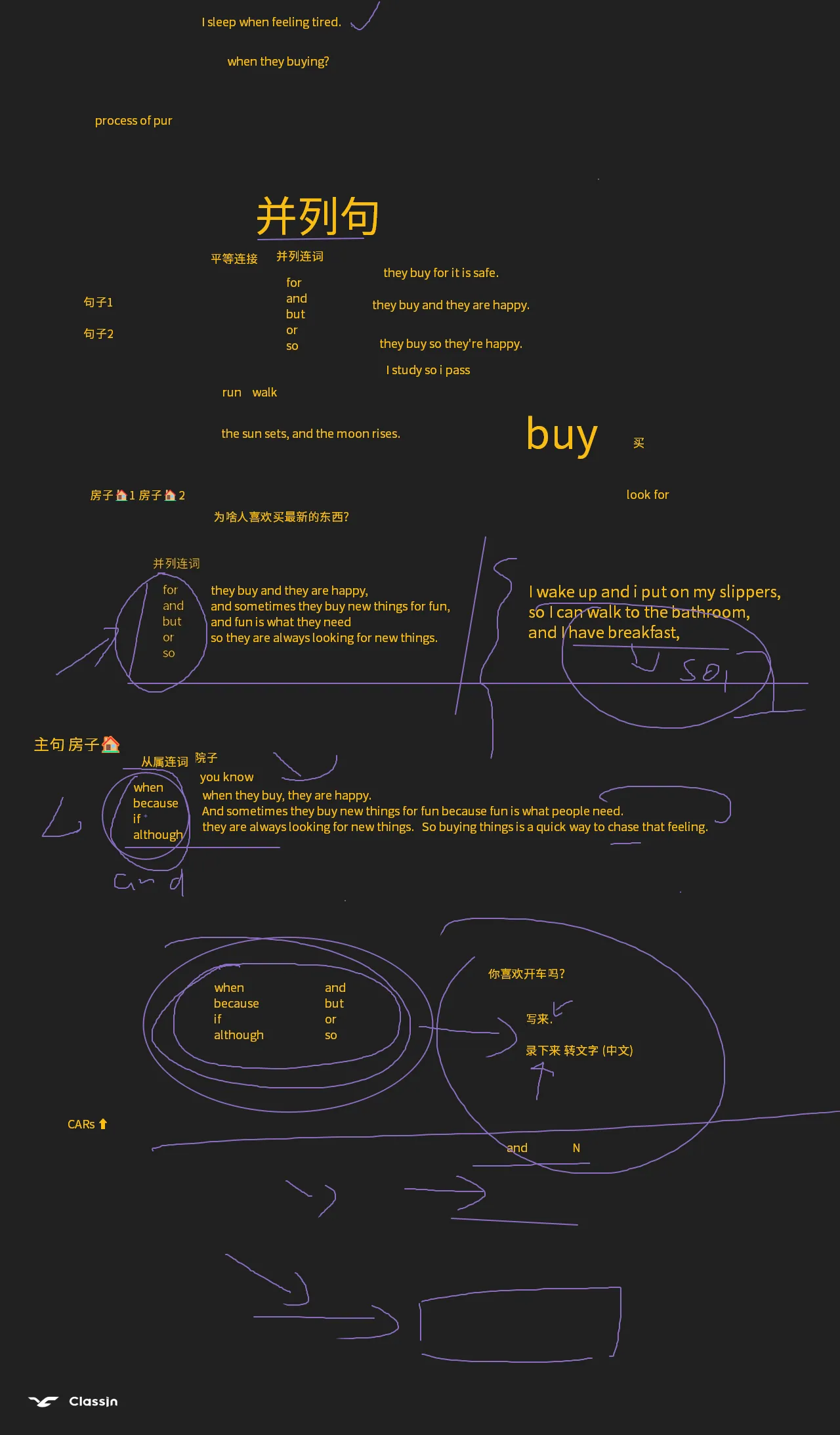
板书标题是 并列句,旁边标注「平等连接 并列连词」,左边写着「句子 1 / 句子 2」。两个句子地位平等,用并列连词接起来:
| 并列连词 | 板书记的句子 |
|---|---|
| for | they buy for it is safe. |
| and | they buy and they are happy. |
| but | (板书只列了词) |
| or | (板书只列了词) |
| so | they buy so they're happy. / I study so I pass |
板书另外给了两个小例子:
the sun sets, and the moon rises.
旁边还写了 run walk(并列的两个动词)和 房子🏠 1 房子🏠 2(两个地位相同的句子,像两栋并排的房子)。
用「买东西」连出来的排比版
板书中段把并列连词圈起来,用同一个话题连出一串:
for they buy and they are happy,
and sometimes they buy new things for fun,
but and fun is what they need
or
so they are always looking for new things.
一句话里连三次
I wake up and I put on my slippers, so I can walk to the bathroom, and I have breakfast,
板书把这一句整个圈起来,并在下面单独写了一个 so —— 提醒:so 表结果,是这句话往前推的关节。
📐 语法体系(四):主句是房子,从属连词是院子
板书用的比喻很形象:主句 房子 🏠 / 从属连词 院子。房子是主体,院子挂在房子外面。
圈出来的四个从属连词:
when / because / if / although
板书记的句子:
you know
when they buy, they are happy.
And sometimes they buy new things for fun because fun is what people need.
they are always looking for new things. So buying things is a quick way to chase that feeling.
板书最后把两块连词并列画成一张图:左边一列是 when / because / if / although,右边一列是 and / but / or / so —— 意思是说,从属连词和并列连词是两套不同的关节,别混着用。
📐 语法体系(五):分词短语、后置定语和 when
1. 现在分词短语做伴随状语
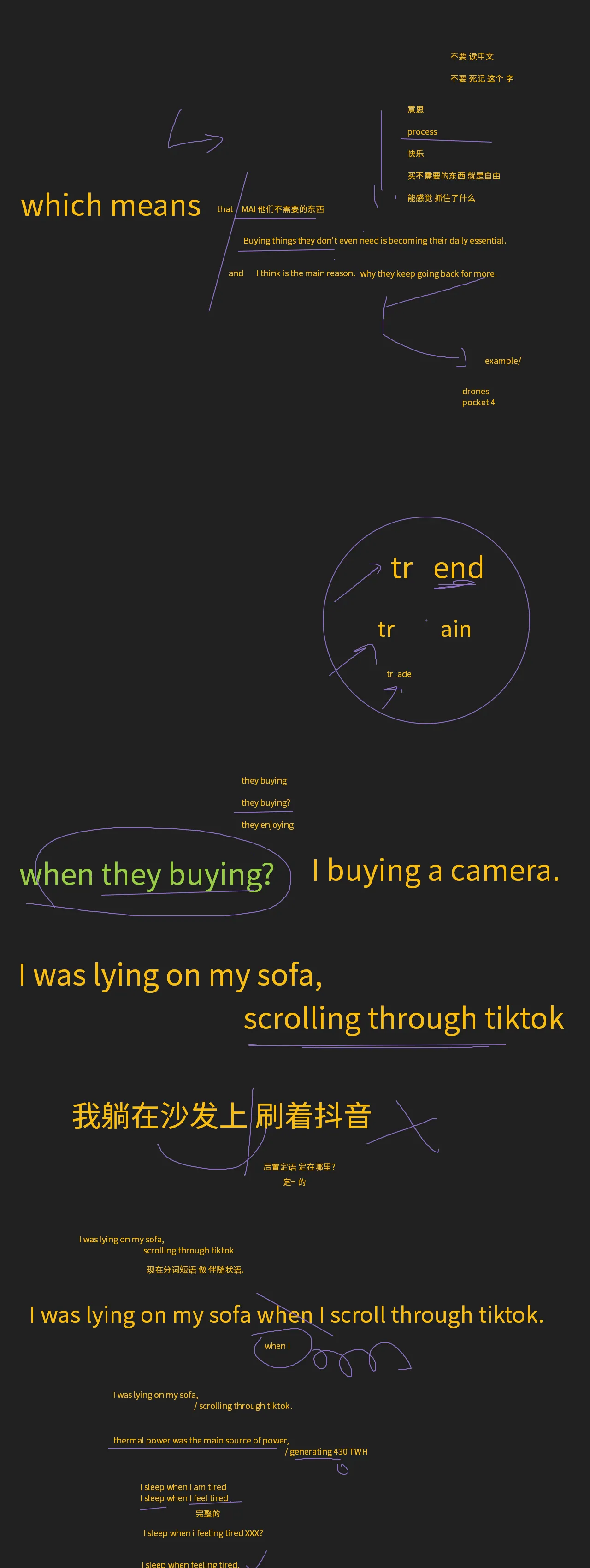
I was lying on my sofa, scrolling through tiktok
板书在旁边写了中文:我躺在沙发上 刷着抖音,并批注:
现在分词短语 做伴随状语.
2. 后置定语「定在哪里」
同一个中文画面,板书追问了一句:后置定语 定在哪里? 然后自己回答:定 = 的。也就是中文里那个「的」,在英文里被放到被修饰词的后面去。
3. 再换一个说法,用 when
I was lying on my sofa when I scroll through tiktok.
板书把 when I 圈了出来。同一句还有拆行写法:
I was lying on my sofa, / scrolling through tiktok.
4. 同样的结构再套一次(另一种话题)
thermal power was the main source of power, / generating 430 TWH
5. when 后面到底跟什么 —— 一组对比
板书列了四个句子:
| 板书原句 | 板书批注 |
|---|---|
| I sleep when I am tired | 完整句 |
| I sleep when I feel tired | 板书批注:完整的 |
| I sleep when I feeling tired XXX? | 标了 XXX,是错的说法 |
| I sleep when feeling tired. | 打了勾 |
6. 板书上被圈出来的两个错
when they buying?
I buying a camera.
they buying / they enjoying
这三行就是「一个分句只有一个谓语动词」这条底线被踩了 —— buying / enjoying 不能自己当谓语站着。
🧭 语义体系:语义不搭,要靠小搭配攒
板书这一段只有几句话,但都是方向性的:
- 语义不搭 —— 一个词没错、语法也没错,但放在一起就是不对,这叫语义不搭。
- 需要不断的日常讲小搭配。比如 交朋友 做运动 学知识...
- 一定要用英语想。
板书举的对照例子:
| 中文 | 板书配的动词 |
|---|---|
| 打电话 | make |
| 交朋友 | make / gain |
同一个「打」「交」,英文要按搭配选词,不能按中文一个字一个字对过去。
板书旁边还写了两句提示,是针对学习方法说的:
不要读中文
不要死记这个字
下面排着几个关键词:意思 / process / 快乐 / 买不需要的东西就是自由 / 能感觉 抓住了什么。意思是:理解一个词,要抓它背后的意思和感觉(比如 process、快乐),而不是抓中文字面的对应。
🧭 逻辑体系:观点 because 例子
板书标题下面第一行就是公式:
观点 because 例子。
接着是一个可以直接套的模板:
I prefer X because it... For example, last year I...
再下面一行是三个连接件的清单:
because / which means / for example
which means 的用法(板书中段放大的那个词)
板书把 which means 单独放大,右边列了两个要点:
- 不要读中文
- 不要死记这个字
然后给出示范句子:
Buying things they don't even need is becoming their daily essential.
and I think is the main reason. why they keep going back for more.
板书还有一行 that MAI 他们不需要的东西 —— 这是提示 that 后面挂的是一个完整的「谁做什么」(板书原文就是 MAI)。
最后写了一个 example/,下面列出两个具体的例子物件:drones、pocket 4。
顺手带的两个词
板书在逻辑体系这一块还写了 rut,旁边挨着两个长得像的词:
| 词 | 板书中文 |
|---|---|
| rock | 石头 |
| rot | 腐败 |
以及一句:
rock bottom 谷底.
I hit rock bottom mentally.
💬 整段示范一:HBM 涨价
板书左上角写着「HBM 涨价」,标出全称 high bandwidth memory。整段按「时间 / 地点 / 触发 / 细节 / 为什么 / 个人故事」排下来。
题目:
Describe a piece of technology that caught your attention
time:
It was last month that I came across this piece of news.
place:
I was lying on my sofa, scrolling through TikTok.
trigger:
A video popped up on my screen,
detail:
it was about HBM - high bandwidth memory.
板书在 detail 下面补了一句:conveyor belt for CHIPS(芯片的传送带)。
why:
sent shockwaves through the industry
surge in demand
and the supply chain is struggling to keep up, driving prices through the roof
I wondered how a piece of memory could cause such a big stir
过渡的一句口语:
hear me out....
personal anecdote(个人故事):
on a tight budget
HBM is a type of memory sits right next to the CHIP. feeding it data at an insane speed. that's why we call it super conveyor belt.
RTX 5090.
here's the thing: they need chips, chips need the super conveyor belt.
since the prices are being driven through the roof, this is the first I realize what equilibrium is
its price "went up" almost overnight, all because of HBM underneath.
HBM turned CHIPS into luxury item for most people.
and I doubt prices will drop any time soon
收尾这句 and I doubt prices will drop any time soon 就是逻辑体系里的「观点 + 例子」走完之后的那一下回扣。
💬 整段示范二:为什么有人抢着买最新的科技产品
板书给的主问题:
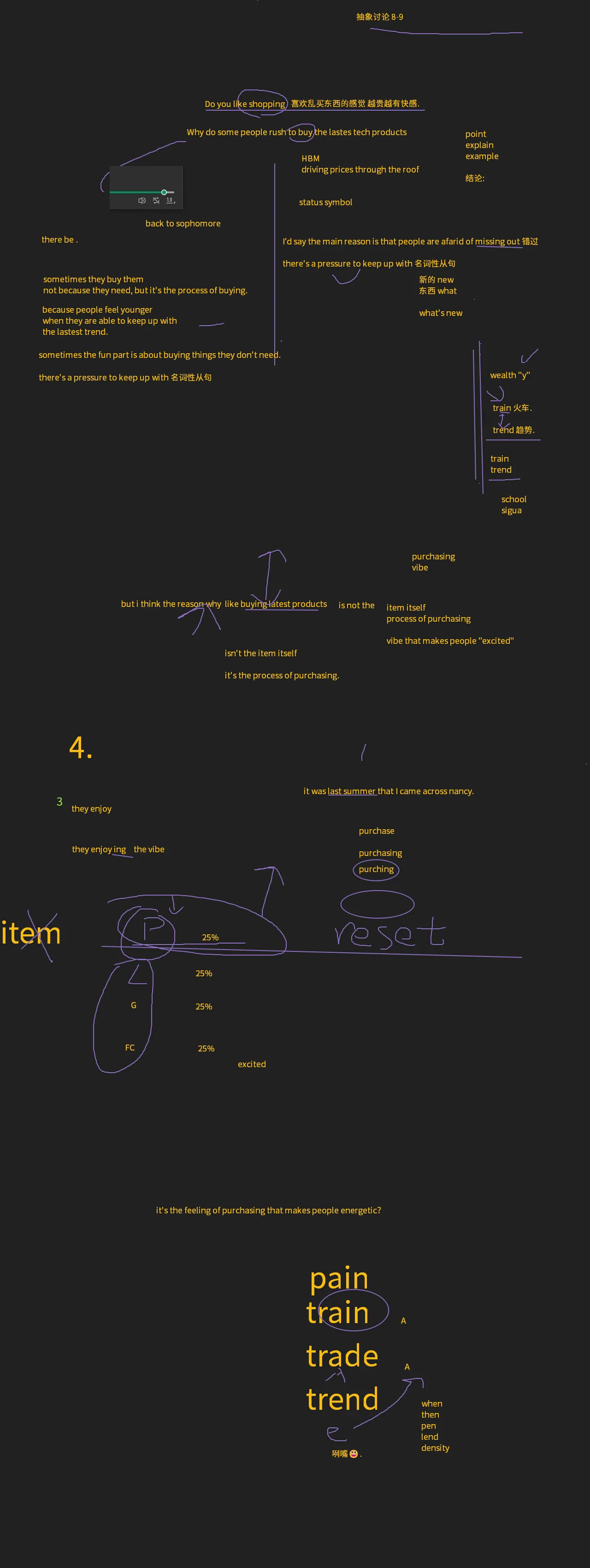
Why do some people rush to buy the latest tech products
旁边标了四步骨架:point / explain / example / 结论:
Point:
I'd say the main reason is that people are afraid of missing out
Explain:
there's a pressure to keep up with...
板书在 keep up with 旁边批了 名词性从句 —— 提醒这个位置后面要挂一个完整的句子,而不是一个光秃秃的名词。
板书还就「新东西」这个词做了拆解:
| 中文 | 英文 |
|---|---|
| 新的 | new |
| 东西 | what |
| 新东西 | what's new |
Example / 展开:
sometimes they buy them not because they need, but it's the process of buying.
because people feel younger when they are able to keep up with the latest trend.
sometimes the fun part is about buying things they don't need.
结论:
but I think the reason why like buying latest products is not the item itself
isn't the item itself
it's the process of purchasing.
板书把结论的核心词单独拎出来:item itself(东西本身)、process of purchasing(买的过程)、vibe、以及 vibe that makes people "excited"。
最后用一个强调句把结论顶起来:
It's the feeling of purchasing that makes people energetic?
另一个相关问题:
Do you like shopping
板书在旁边的批注是:喜欢乱买东西的感觉,越贵越有快感。
同一个话题里,板书还写了一个补充理由:status symbol(身份象征),以及 HBM / driving prices through the roof(作为「为什么会有人抢」的一个具体触发)。
词形小链
板书把几个词的构词关系排在一起:
- wealth "y" —— 后缀 y 用引号单独标出来
- train 火车. → trend 趋势.
- train / trend 再列一次
📊 分数段:说到什么程度是几分
板书右侧把 P3 的评分档位写全了:
| 档位 | 板书内容 |
|---|---|
| 1-2 | 6 以下 |
| 3-5 | 直接回答 理由 具体例子 转折 后果 |
| 7 | 7 |
| 8-9 | 抽象讨论 8-9 |
7 分的具体量化标准,板书列的是:
- 7 分
- 40 秒 - 60 秒
- 4-6 个句子
- 说了多久
- 说的深
- extended answer / coherent / developed
也就是说:长度(40-60 秒、4-6 句)+ 深度(说得深) 两条一起看,评分描述词就是 extended answer、coherent、developed。
另外板书画了一张四等分的图,每一格标 25%,图里能看清的标注有 P、G、FC(另有一个字母看不清),图里还写了 excited。
📖 词汇与表达
| 英文 | 中文 | 搭配 / 用法 |
|---|---|---|
| high bandwidth memory (HBM) | — | 板书标题:高带宽内存涨价 |
| conveyor belt | — | conveyor belt for CHIPS |
| CHIPS | 芯片 | 板书写作 CHIPS |
| shockwave | — | sent shockwaves through the industry |
| surge | — | surge in demand |
| supply chain | — | the supply chain is struggling to keep up |
| drive prices through the roof | — | driving prices through the roof |
| stir | — | cause such a big stir |
| hear me out | — | 口语过渡,「听我把话说完」 |
| on a tight budget | — | personal anecdote 里用 |
| equilibrium | — | this is the first I realize what equilibrium is |
| luxury item | — | HBM turned CHIPS into luxury item for most people |
| status symbol | — | 身份象征 |
| miss out | — | afraid of missing out |
| keep up with | — | + 名词性从句 |
| vibe | — | the vibe that makes people "excited" |
| purchase / purchasing | — | the process of purchasing |
| item | — | the item itself |
| rut | — | 与 rock / rot 排在一起 |
| rock | 石头 | rock bottom 谷底 |
| rot | 腐败 | |
| rock bottom | 谷底 | I hit rock bottom mentally. |
| trend | 趋势 | keep up with the latest trend |
| train | 火车 | train / trend |
| sophomore | — | back to sophomore |
| extended answer | — | 7 分评分描述 |
| coherent | — | 7 分评分描述 |
| developed | — | 7 分评分描述 |
⚠️ 提醒 / 易错
1. 板书上被圈出来的错句,都是同一条底线被踩
| 错句 | 问题 |
|---|---|
| when they buying? | buying 不能自己当谓语 |
| I buying a camera. | 同上,缺 be 动词 |
| they buying / they enjoying | 同上 |
| I sleep when I feeling tired XXX? | when 后面要么给完整句,要么直接 when + -ing |
| purching | 板书把这个拼写圈了出来,下面写了一个 reset —— 拼错的词要 reset 重来 |
正确的两条路,板书都给过:
I sleep when I feel tired.(完整的)
I sleep when feeling tired.(省略主语,直接 -ing)
2. 一个分句只有一个谓语动词 —— 第二个动作必须挂上去
五个挂钩,背下来:to / and / that / 从句 / -ing。
3. 一个故事一个时态
不要讲到一半换时态(板书旁标:had classes)。
4. 不要读中文,不要死记这个字
语义体系那一段的两条提醒,和 which means 那一段重复出现了一次,说明是这节课反复强调的:抓意思和感觉(process / 快乐),不要抓中文字面。
5. 语义不搭,靠小搭配攒
打电话用 make,交朋友用 make / gain —— 同一个中文动词,英文要按搭配走。日常要不断讲这些小搭配:交朋友、做运动、学知识。
6. 逻辑不能断
说完观点,一定要能接 because(为什么),再接例子;接不下去的时候用 which means 往前推一步,或者用 for example 落地。板书给的模板就一句:
I prefer X because it... For example, last year I...
7. P3 的两把尺子
说了多久(40-60 秒、4-6 个句子)+ 说的深(extended answer / coherent / developed)。只答 1-2 句,就是 6 以下。
8. 练习方式
板书右下角写了一个问题「你喜欢开车吗?」,旁边标着两种练习动作:写来(写下来)、录下来 转文字(中文) —— 先写、再录音、再转成文字回头看,是这节课给的自我检查路径。